Bare Bulbs and Big Feelings: Why Live Lit Audiences Are Done With the Smoke and Mirrors
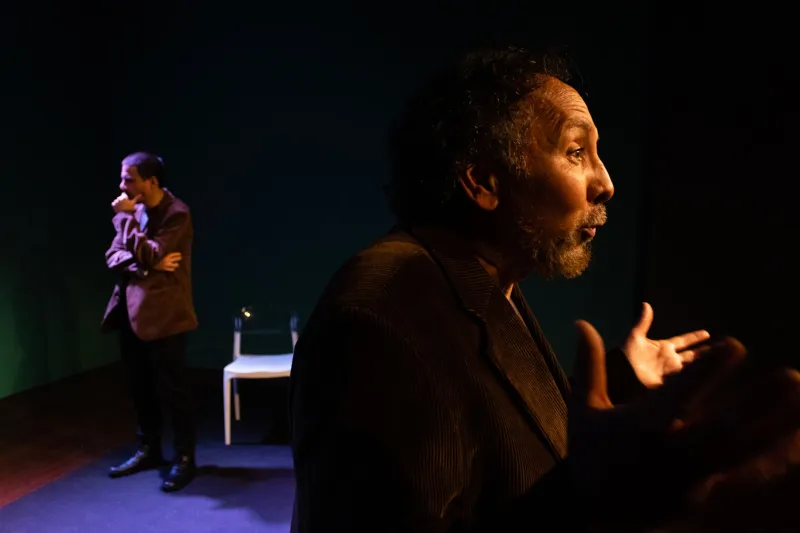
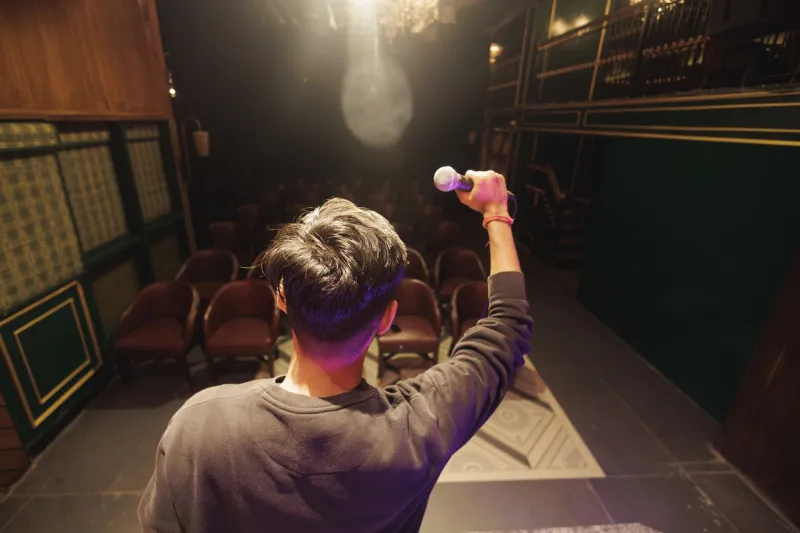
There's a moment that happens in small rooms all over this country — a basement in Brooklyn, a converted warehouse in Austin, a bookshop back room in Portland — where a performer steps up to a microphone with nothing but a crumpled piece of paper and a shaky exhale, and the entire audience leans forward at once. No fog machine. No choreographed light cues. Just a person, a story, and the terrifying electricity of being truly seen.
That moment? That's the whole thing right now.
Something real is happening in the live literary entertainment space, and it runs counter to just about every instinct the entertainment industry has operated on for the last two decades. In a cultural moment defined by algorithmic polish and content optimized within an inch of its life, audiences are actively seeking out the unpolished. The imperfect. The human.
Welcome to the intimacy economy — and it is absolutely booming.
The Spectacle Fatigue Is Real
Let's be honest: we're all a little exhausted. After years of doom-scrolling through hyper-curated feeds and sitting through productions that feel more like theme park rides than storytelling, a significant chunk of the American live entertainment audience has quietly started voting with their feet — and their wallets — for something different.
Ticket sales data from independent spoken word festivals and literary event series across the US tell an interesting story. Smaller, more intimate events with minimal production budgets are routinely selling out faster than their bigger, flashier counterparts. Venues that cap attendance at 75 to 150 people are reporting waitlists. Meanwhile, some large-scale literary galas with celebrity headliners and full production crews are struggling to fill seats at the same price point.
The shift isn't about production quality being bad. It's about audiences recalibrating what they actually want from a live experience. And increasingly, what they want is to feel something genuine — not to watch something impressive.
Your Brain on Vulnerability
Here's where it gets fascinating. There's actual neuroscience behind why raw, unguarded performance hits differently than a perfectly executed show.
When we witness someone being genuinely vulnerable — voice cracking, hands trembling, pausing because a memory is too heavy — our brains release oxytocin, the neurochemical associated with trust and bonding. It's the same response triggered by physical touch or deep eye contact. We're literally wired to connect with emotional honesty. A flawless, technically perfect performance can inspire awe, but it doesn't necessarily trigger that same chemical cascade of I feel close to this person right now.
Researchers studying social bonding and performance have found that perceived authenticity dramatically increases audience empathy and recall. In plain terms: we remember the stories that made us feel like we were in the room with a real human being, not watching a finished product from a distance.
Live literary performers have been tapping into this — sometimes intuitively, sometimes intentionally — for years. But lately, it's become something closer to a conscious artistic and business strategy.
Vulnerability as Currency
Spoken word artists, essayists doing live readings, and memoir performers are increasingly framing their most difficult, most personal material not as a risk but as a resource. The stuff that traditional gatekeepers once called "too niche" or "too raw" — addiction, grief, queerness, poverty, mental illness, family rupture — is exactly what's packing rooms.
Performers like those you'll find headlining events from The Moth's touring shows to local open mic nights in Chicago and Atlanta are learning something important: the more specific and unguarded the story, the more universally it lands. Paradoxically, the most personal material creates the most communal experience.
This is vulnerability as currency. Not trauma tourism — there's an important distinction — but the deliberate, crafted offering of honest human experience in exchange for genuine audience connection. And audiences are paying for it, tipping generously at the merch table, and coming back.
Spaces Built for Feeling, Not for Filming
Venues are catching on, too. A new generation of event designers and literary space curators is actively pushing back against the Instagram-optimized aesthetic that dominated the mid-2010s. Instead of spaces built to look good on a grid, they're building rooms designed to feel good to be inside.
That means lower ceilings. Warmer light. Seating arrangements that put performers and audiences on roughly the same plane rather than elevating the stage into a separate universe. It means fewer chairs, not more — because a half-empty room kills intimacy, and a sold-out room of 80 people beats a two-thirds-full room of 300 every single time.
Some venues are going further: no photography policies during performances (controversial, yes, but increasingly popular), phone-free zones enforced by honor system, and post-show hang time built into the event structure so audiences and performers can actually talk. The goal is to make the event feel like it happened, fully, in that room — not like content that was created there.
This is a direct rebuke of the "if it wasn't documented, did it even happen?" culture that's defined so much of live entertainment for the past decade. And audiences are responding to it with something that looks a lot like relief.
What This Means for the Scene
The intimacy economy isn't going to replace spectacle entirely — big, lavish productions aren't going anywhere, and nor should they. But the live literary world is carving out a distinct lane that's proving remarkably durable and financially viable.
For performers, it's an invitation to stop chasing the production values of venues and budgets they don't have access to, and start leaning harder into the one thing nobody can replicate or automate: their specific, irreplaceable human experience.
For audiences, it's permission to want what they've always actually wanted from a night out with words — not to be dazzled, but to be moved. Not to witness something perfect, but to share something true.
And for the live lit scene as a whole? It's a reminder that the most powerful technology in the room has always been a person standing in front of other people, telling the truth.
The glitter is still here. It's just in the feeling now, not the production design.