Swipe Right on the Stage: How TikTok Poets Are Selling Out Real Rooms
Not long ago, the pipeline from poet to performer ran through open mics, literary journals, and years of grinding in dimly lit venues for audiences of maybe thirty people. Today, that pipeline has a new on-ramp: a ring light, a decent phone mic, and a TikTok account with the right algorithm energy.
The numbers are genuinely wild. Poets who would have spent a decade building a regional following are amassing hundreds of thousands of followers in a matter of months. And increasingly, they're converting that digital love into something you can only get in person — the electric, unrepeatable experience of a live performance. Tickets are moving. Rooms are filling. The glitter is very much real.
But how exactly does a creator who built their art in a bedroom translate that into a sold-out theater run? The answer is more complicated — and more fascinating — than you might think.
The Algorithm Taught Them Hooks
Here's something traditional spoken word coaches will tell you: most new performers bury the lede. They warm up slowly, they hedge, they apologize with their body language before they've said a single word. TikTok poets don't have that problem.
Growing up on a platform where viewers scroll away in two seconds flat, digital-native performers have internalized the art of the opening hook at a cellular level. They know how to land an image, a line break, or an emotional gut-punch in the first breath. That skill — ruthlessly honed by algorithmic feedback — translates beautifully to a live stage where you have maybe ninety seconds to earn an audience's full attention.
Creators like Maya Noel, a 24-year-old poet from Atlanta who grew her following to over 400,000 on TikTok before booking her first national tour, describe the platform as an unlikely performance school. "Every video is basically a tiny show," she explained in a recent interview. "You learn really fast what lands and what loses people. By the time I got on a real stage, I'd already performed those poems hundreds of times. I just finally had a room full of people who could clap back."
The Gap Between the Grid and the Green Room
Of course, it's not all a seamless transition. The skills that make someone a viral sensation don't automatically make them a commanding stage presence — and plenty of online poets have discovered that the hard way.
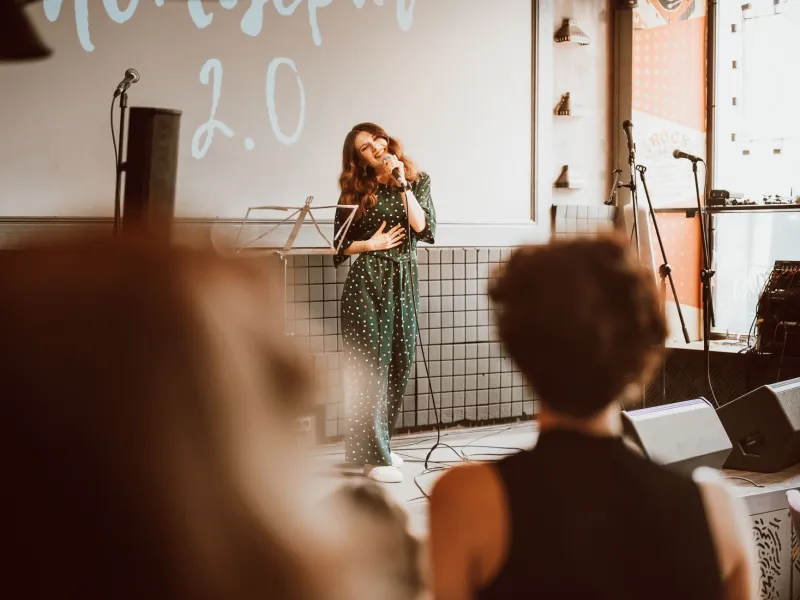
The camera flattens space. On TikTok, stillness reads as intimacy. On a 200-seat stage, that same stillness can read as stiffness. Movement, projection, the use of physical space — these are craft elements that the screen simply doesn't demand. Several creators have spoken candidly about the jarring experience of their first live shows, where they realized their material was written for a two-inch phone speaker rather than a room with actual acoustics.
There's also the question of length. TikTok's short-form format means many of these poets have built entire catalogs of work that runs under two minutes per piece. Stitching those fragments into a cohesive hour-long show requires a different kind of storytelling architecture — something closer to a theatrical narrative than a content feed.
Jordan Reyes, a Chicago-based poet and performer who made the jump from viral videos to a residency at a local black box theater, put it plainly: "I had to learn how to breathe between poems. On TikTok, you cut. On stage, you live in those pauses. That silence is yours to own or to lose."
What Traditional Venues Are Waking Up To
For decades, the spoken word circuit operated on a tight, self-referential loop — the same venues, the same networks, the same audiences. TikTok poets are crashing that loop in the best possible way, and the smarter venue operators are paying close attention.
What these new performers bring isn't just a built-in audience (though that's obviously a booking manager's dream). They bring a different relationship with their fans — one built on parasocial intimacy, consistent content, and direct communication. Their followers don't just admire them; they feel like they know them. That translates into audiences who are emotionally invested before the house lights even go down.
Venues that have leaned into this dynamic — offering meet-and-greets, letting performers promote shows through their own channels, creating shareable moments designed for post-event content — are seeing returns that traditional literary events rarely generate. The lesson the old guard is slowly absorbing: community isn't just a nice-to-have. It's the product.
The Glitter and the Grit
There's something genuinely thrilling about this moment. Poetry — the art form that has been declared dead approximately every fifteen years since the 1950s — is having a full-on cultural renaissance, and it's being driven by young people who never got the memo that it wasn't cool.
These creators are proof that the stage and the screen don't have to be rivals. The phone is a rehearsal space. The algorithm is a feedback mechanism. And the live room — that dark, warm, breathing space where a poem can break someone open in real time — is still the destination that matters most.
For anyone watching this wave from the outside, the takeaway is clear: the next generation of great American spoken word artists might have gotten their start in a bedroom, but they've got their eyes on something much bigger. And honestly? We've got our eyes on them too.