Fewer Seats, Bigger Checks: The Business of Selling Out Small

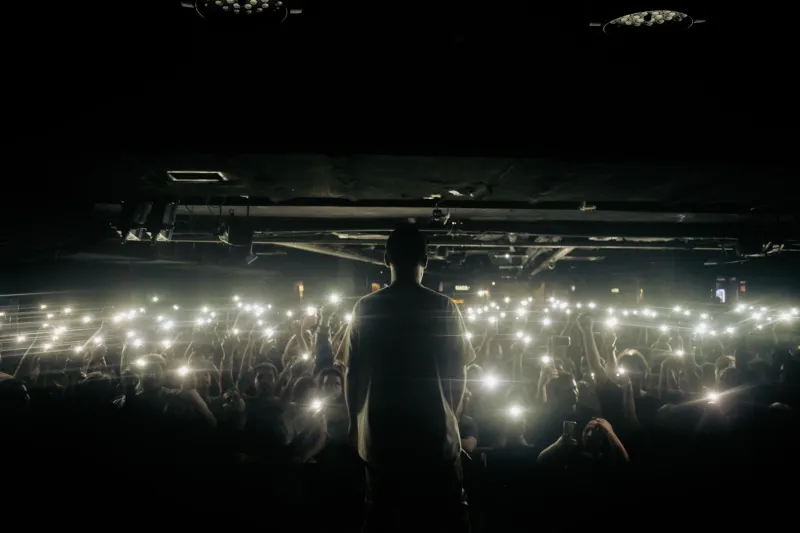
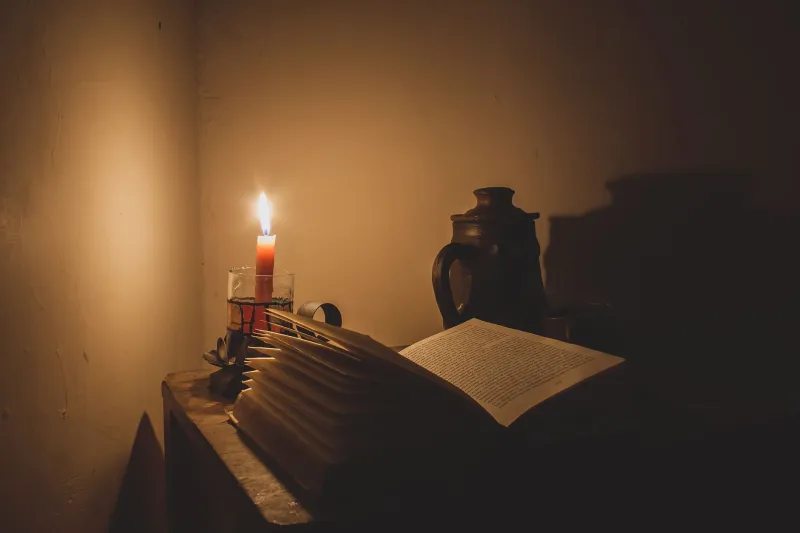
There's a particular kind of electricity that happens when you walk into a room of forty people and realize every single one of them paid serious money to be there. No casual attendees. No plus-ones who got dragged along. Just a curated crowd, a single mic, and a performer who has decided their work is worth exactly what they're charging for it.
This is the intimacy economy. And spoken word artists across the country are quietly building some of the most profitable — and most loyal — audiences in the live entertainment space by leaning all the way into it.
The Math Nobody's Talking About
Here's the thing about a 500-seat venue: filling it is expensive, stressful, and often means you're splitting revenue with a promoter, a venue, a lighting crew, and whoever designed those disappointing pretzels at the bar. Now imagine a living room in Brooklyn, a wine bar in Silver Lake, a rooftop loft in Atlanta — forty seats, $85 a ticket, and zero middlemen.
That's $3,400 before you've sold a single book, signed a single poster, or offered a single post-show conversation package. Artists who run two or three of these intimate events a month aren't scraping by. They're building.
Poets and spoken word performers have historically underpriced themselves into invisibility — the $10 open mic, the free-with-donation community show, the literary festival appearance that came with a travel reimbursement and a thank-you email. The intimacy economy is a direct rejection of that model. It says: scarcity is a feature, not a bug. Exclusivity isn't elitist — it's strategic.
Why Audiences Are Paying More and Feeling Better About It
Pricing psychology in the live arts world is a fascinating thing. Counter-intuitively, higher ticket prices often make audiences more satisfied with the experience, not less. When someone pays $120 for an intimate spoken word evening, they show up primed. They're invested. They're not scrolling their phone in the back row. They're present in a way that a $15 ticket simply doesn't manufacture.
And performers feel it. There's a feedback loop that happens in a high-investment room — the audience brings their full attention, the artist rises to meet it, the work lands harder, and everyone leaves feeling like they witnessed something genuinely rare. Because they did.
Social currency plays into this too. Telling someone you attended an exclusive, sold-out spoken word evening — one where the artist only performs for groups of fifty or fewer — carries a very different cultural weight than saying you caught a show at a mid-size venue on a Tuesday. Scarcity creates story. And people will pay for a good story to tell.
Tiers, Tiers, Tiers
The smartest artists aren't abandoning larger shows entirely. They're building ecosystems. Think of it as a pyramid: general admission shows at the base, mid-tier experiences in the middle, and ultra-exclusive intimate gatherings at the top.
A poet might do a 200-person show at a beloved indie theater, then offer a separate, limited-capacity post-show conversation for an additional fee. They might run a quarterly "salon series" — ten guests, a private home, a curated evening of new work — priced at $200 a head. Each tier serves a different segment of their audience and creates a natural aspirational ladder. Fans who attend the general show see the salon series mentioned and immediately want in. The waitlist becomes its own marketing engine.
This isn't a new concept in entertainment broadly — VIP packages, meet-and-greets, and backstage experiences have existed in music for decades. But spoken word is uniquely positioned to execute it with authenticity, because intimacy is already baked into the art form. Nobody needs convincing that a poet in a small room is a better experience than a poet in an arena. The genre sells the model.
Scarcity as Storytelling
Artists who've cracked this model talk about scarcity not as a sales tactic but as an artistic statement. Limiting attendance isn't about manufacturing demand — it's about protecting the integrity of the work.
When a performer can look every person in the room in the eye, when the audience is small enough that a single person crying in the third row changes the energy of the entire space, when questions after the show feel like real conversations rather than a Q&A format — that's a different category of experience. And framing it that way, communicating it that way, is what separates artists who are thriving in this model from those who are just charging more for the same thing.
The language matters enormously. "Limited engagement" hits differently than "small show." "Curated gathering" does different work than "intimate event." Artists who understand that the framing of scarcity is part of the product are the ones building waitlists that stretch months out.
The Community Play
Here's the part that might surprise you: the intimacy economy isn't just good for artists' bank accounts. It's good for audiences in ways that extend well beyond a single evening.
People who attend high-investment intimate events tend to find each other. They become regulars. They form the kind of literary community that used to coalesce around bookstores and now struggles to find physical footing in an increasingly digital world. A poet running a monthly salon series isn't just selling tickets — they're curating a community, and that community becomes a self-sustaining source of support, word-of-mouth marketing, and genuine artistic engagement.
Several artists working this model describe their intimate event regulars as something closer to patrons than ticket buyers. People who show up not just to consume but to be part of something. That's a fundamentally different relationship with an audience, and it's one that the scale-at-all-costs model of mainstream entertainment can't replicate.
What It Takes to Pull It Off
None of this works without one non-negotiable ingredient: the work has to be exceptional. Premium pricing in the intimacy economy is only sustainable if the experience consistently delivers. A $150 evening of spoken word that underwhelms will not generate a waitlist. It will generate a very polite, very pointed group of one-star reviews.
The artists succeeding here are the ones who treat every intimate show as the highest-stakes performance of their career — because for the people in that room, it is. They're bringing new material. They're crafting the evening with the same attention a director brings to a theatrical production. They're thinking about the arc of the night, the lighting, the silence between poems, the conversation afterward.
Glitter and craft, working together. That's the intimacy economy at its best — and it's just getting started.