Opening Act Energy: Why the Bottom of the Bill Is Running the Room
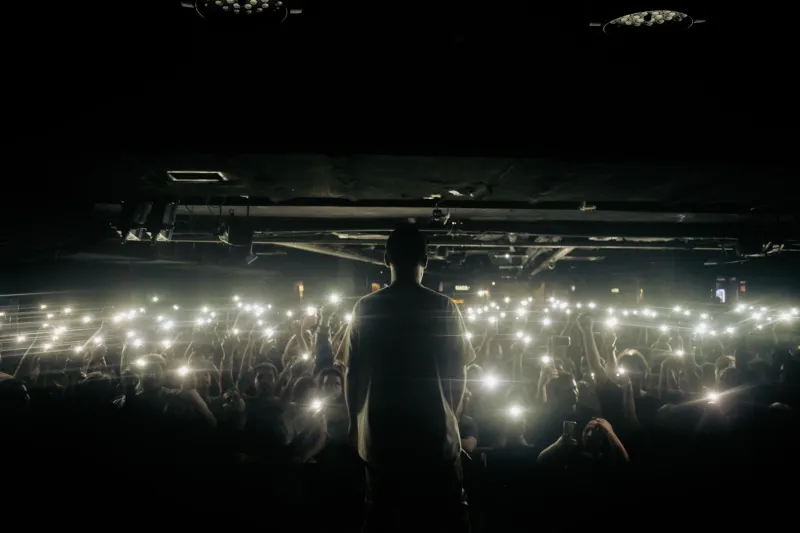
There's a moment that's been happening with increasing frequency at live literary events from Austin to Brooklyn to Chicago's Wicker Park. The headliner finishes their set to warm, respectful applause. The audience claps, maybe pulls out their phones. And then someone in the crowd turns to their friend and says, "But did you see that second poet though?"
That second poet — the one who went on at 7:45 when half the room was still finding their seats — is the one people are texting about on the ride home. They're the one whose name gets Googled before the night is over. And increasingly, they're the reason a chunk of that audience showed up in the first place.
The undercard effect is real, it's growing, and it's quietly rewriting the economics of live literary entertainment.
The Flyer Doesn't Lie Anymore
For decades, the live performance world operated on a simple assumption: the name at the top of the bill drew the crowd, and everyone else was there to build anticipation. That logic held in music, in comedy, and absolutely in spoken word and literary events. Headliners had the publishing deals, the festival credits, the name recognition. Openers were paying dues.
Social media didn't just complicate that model — it blew a hole straight through it.
A poet with 180,000 TikTok followers and a Substack that converts readers into ride-or-die fans doesn't need a decade of stage credits to command a room. They've already built the relationship. When they show up on an undercard, their audience shows up with them — sometimes in numbers that quietly dwarf the headliner's local pull. Promoters are starting to do the math, and the math is humbling.
"I've had openers sell more merch at the table in one night than the headliner moved on an entire weekend run," says one independent lit event producer who books shows in the Southeast and asked to remain unnamed because, as she put it, "I don't want any beef with people I still work with." That's not a knock on the headliners, she's quick to add. It's just a new reality about where cultural momentum lives right now.
Who's Actually in the Room
Part of what's driving this shift is a generational reshuffling of live lit audiences. Younger attendees — the ones filling seats at independent venues and underground reading series — often don't have the same reverence for legacy credentialing that older audiences do. They're not impressed by a prestigious residency if the performance doesn't land. They care about the electricity in the room, the feeling that something unrepeatable is happening right now.
Emerging performers tend to bring that electricity in abundance. They're hungrier, often more experimental, and less likely to lean on a greatest-hits set they've performed a hundred times. There's a rawness and a risk-taking quality to a poet who's still figuring out who they are on stage — and audiences are responding to it.
That's not to say established headliners don't deliver. Many absolutely do. But the assumption that name recognition automatically equals room energy? That assumption is getting tested every weekend across the country.
The Breakout Pipeline Is Getting Shorter
What's remarkable is how quickly undercard buzz is now converting into real career momentum. The traditional path — years of open mics, building a local following, slowly getting higher billing, eventually headlining — still exists, but it's compressing fast.
Take performers like Porsha Olayiwola, whose work exploded through a combination of competition wins, video virality, and relentless touring before she'd headlined many of the rooms that now court her. Or look at the wave of poets who built massive online audiences during the pandemic and returned to live stages with fanbases that promoters couldn't have predicted from their modest pre-COVID billing history.
The pipeline from "opening act" to "sold-out solo show" used to take the better part of a decade. Right now, for the right performer with the right material and a genuine social media presence, it can happen in under two years.
Promoters Are Catching Up — Slowly
The booking world is still adjusting. There's institutional inertia in how live lit events get programmed. Headliners often come attached to guarantees, agent relationships, and promotional machinery that smaller acts don't have. Venues and producers have existing relationships with established names, and those relationships have real financial value.
But smart promoters are starting to think differently about lineup construction. Rather than treating the undercard as a warm-up function, some are approaching it as a talent incubator — a place to identify and develop acts who might be headlining their rooms in eighteen months. A few are going further, building events explicitly around multiple emerging voices rather than the traditional one-star model, and finding that audiences respond enthusiastically to the format.
The "curated collective" model, where four or five emerging performers share a bill without a clear headliner, has been gaining traction in cities with strong spoken word scenes. It's democratic, it's energetic, and it sidesteps the whole question of who's more important — because nobody is. Everybody's just there to be great.
The Glitter Is on the Underdogs
There's something genuinely exciting about this moment for the live literary world. The performers who've been told to wait their turn are increasingly refusing to wait — and the audiences are backing them up.
For emerging poets and performers, the message is clear: don't treat an undercard slot like a consolation prize. Treat it like an audition for everyone in the room, including the people who came to see someone else. Come prepared. Come specific. Leave people with no choice but to remember your name.
For promoters and venues, the lesson is just as pointed. Pay attention to who's generating the post-show conversation. Watch the merch table. Notice which performer's set clips are spreading on social media by Monday morning. The next headliner on your roster might already be playing your opening slot.
The stage doesn't care about the hierarchy on the flyer. It only cares about what happens when the mic gets hot. And right now, some of the most electric things happening in live lit are happening in the first forty-five minutes of the night — before the "main event" even begins.