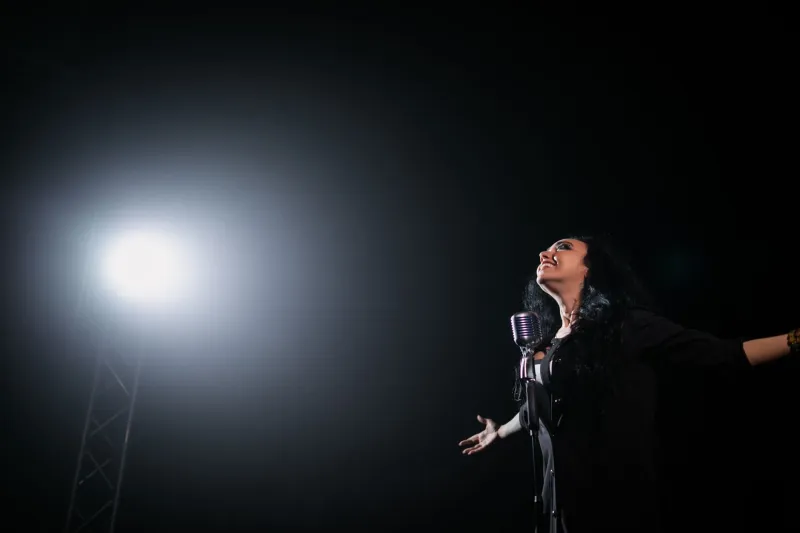
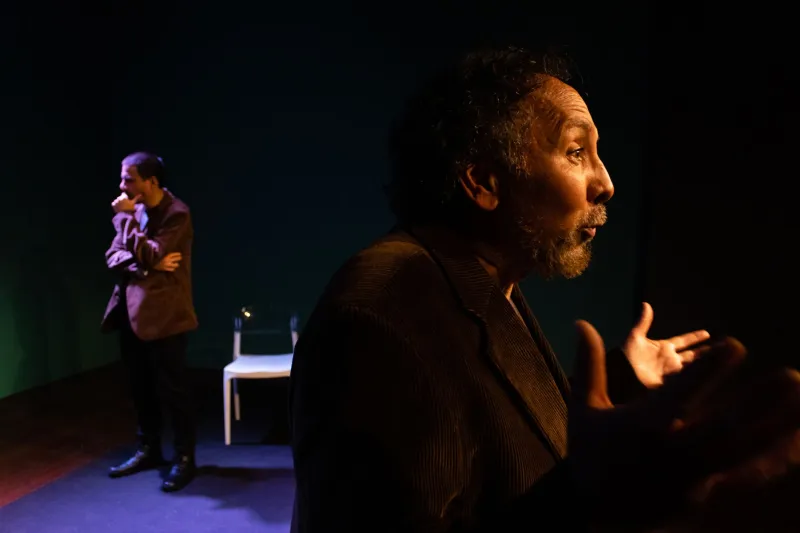
Leave Something in the Dark: Why the Best Spoken Word Artists Know When to Stop Talking
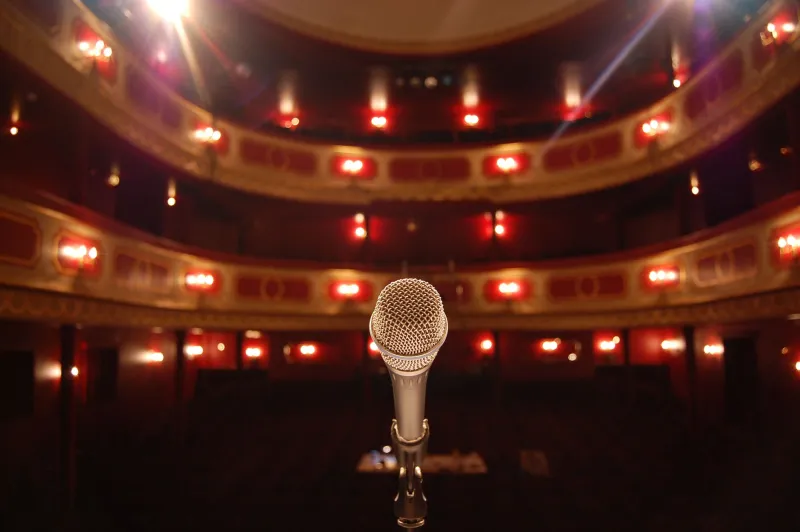
There's a moment in a great spoken word performance when the room goes completely still. Not because the performer just said something devastating — but because they stopped just short of it. The pause stretches. The audience leans in. And in that silence, every single person in the room fills the gap with something personal, something the performer never even had to write.
That moment? That's the whole game. And a growing number of artists are figuring out how to manufacture it on purpose.
For years, the spoken word scene has operated on a pretty straightforward premise: the more you give, the more you get back. Bleed on the mic. Name the thing nobody else will name. Leave everything on the stage floor. Audiences rewarded that kind of courage with standing ovations, viral shares, and the warm glow of collective catharsis. And look — that energy built something real. It gave the art form its backbone.
But something has shifted. Quietly, then all at once.
The Overshare Economy Is Running Out of Currency
Spend enough time in spoken word rooms across the country — from the back-bar venues in Brooklyn to the literary festivals taking over hotel ballrooms in Austin — and you start to notice a specific kind of audience fatigue. It doesn't look like boredom exactly. It looks more like... numbness. A kind of polite endurance that replaces genuine engagement.
Performers are bringing their most raw, most exposed material to the stage, and audiences are applauding — but the applause feels different. Respectful rather than electric. Appreciative rather than hungry.
The problem isn't vulnerability itself. Vulnerability is still the engine. The problem is when vulnerability becomes the entire vehicle — when there's no architecture around it, no tension, no deliberate withholding. When a performer tells you everything, there's nothing left for you to do as an audience member. You're not a participant anymore. You're a witness. And witnessing, it turns out, is exhausting.
Cultural critics have been circling this idea in other arenas for a while. The oversharing economy of social media — the confessional Instagram caption, the trauma TikTok, the thread that ends with "anyway, thanks for coming to my Ted talk" — has conditioned audiences to consume personal revelation at a pace that dulls its impact. When everything is exposed, nothing feels rare. And spoken word, which has always traded on intimacy, is feeling that devaluation more acutely than almost any other live art form.
The Artists Playing a Different Game
Here's what's interesting: while some performers are doubling down on disclosure, a quieter cohort is doing something almost counterintuitive. They're pulling back. Strategically. And their audiences are going absolutely feral for it.
Think about the performers who leave you with a line you can't stop turning over — not because they explained it six different ways, but because they dropped it and moved on. The ones whose stage presence suggests a whole interior world they're only letting you glimpse through a crack in the door. The poets who write about grief without ever telling you exactly who died, or about desire without ever naming who they wanted.
That deliberate ambiguity isn't laziness or evasiveness. It's craft. It creates what narrative theorists call productive tension — the kind of gap that pulls an audience forward rather than letting them sit back and receive.
Some of the most talked-about performers on the circuit right now have built entire artistic identities around strategic restraint. They share enough to establish emotional stakes, then trust the audience to close the loop themselves. The result is performances that feel almost collaborative — like the audience co-wrote something in real time without knowing it.
Silence Is a Technical Skill
This is where the conversation gets genuinely craft-focused, and it's worth slowing down here because it matters.
Silence on stage is terrifying for most performers. The instinct, especially for newer artists, is to fill every second — to keep talking, keep explaining, keep offering. Silence feels like failure. It feels like you've lost the room.
But silence, deployed correctly, is the room. It's the moment when the audience stops processing what you said and starts feeling it. When you let a line land and then give it space — actual, uncomfortable, glittery space — you're not losing the audience. You're handing them something to hold.
The performers who've mastered this often talk about it the same way musicians talk about rests in a score. The notes matter. The rests matter just as much. A piece without rests isn't powerful — it's exhausting. Same principle applies to a twelve-minute spoken word set.
There's also something to be said for what you choose not to put on the page at all. Some of the most affecting pieces in circulation right now work by circling a central wound without ever touching it directly. The subject is implied, felt, triangulated through image and metaphor — but never stated. This technique, borrowed from poetry's longer tradition, creates a kind of gravitational pull. The audience senses the black hole at the center of the piece without ever seeing it directly. That sensation is magnetic in a way that explicit disclosure rarely is.
The Authenticity Paradox
Here's the twist that makes this whole conversation genuinely interesting: restraint, done right, actually reads as more authentic than oversharing.
When a performer tells you everything — every detail, every feeling, every conclusion — it can start to feel managed. Packaged. Like you're receiving a finished product rather than witnessing something real. There's a subtle performance happening even in the most confessional work, and audiences, even unconsciously, can sense when the packaging is tighter than the content.
But when a performer holds something back? When they clearly know more than they're saying, and you can feel that knowledge pressing against the edges of the piece? That feels true. That feels like the way people actually move through difficult experiences — not with perfectly articulated revelations, but with partial understanding, unresolved feeling, and the things they still can't quite say out loud.
The mystery isn't a withholding of authenticity. It is authenticity.
What This Means for the Scene
None of this is an argument against vulnerability. The spoken word scene's willingness to go to uncomfortable places is still its greatest strength. What it's an argument for is intention — for treating restraint as a tool in the kit rather than a failure of nerve.
The most compelling performers working right now aren't choosing between openness and mystery. They're holding both at once. They're letting you in far enough to feel something, then trusting you to find your own way to the door.
That's not a retreat from the stage. That's a deeper kind of presence.
And honestly? It's a lot more interesting to watch.