When the Light Becomes the Story: How Visual Design Is Rewriting the Rules of Live Lit
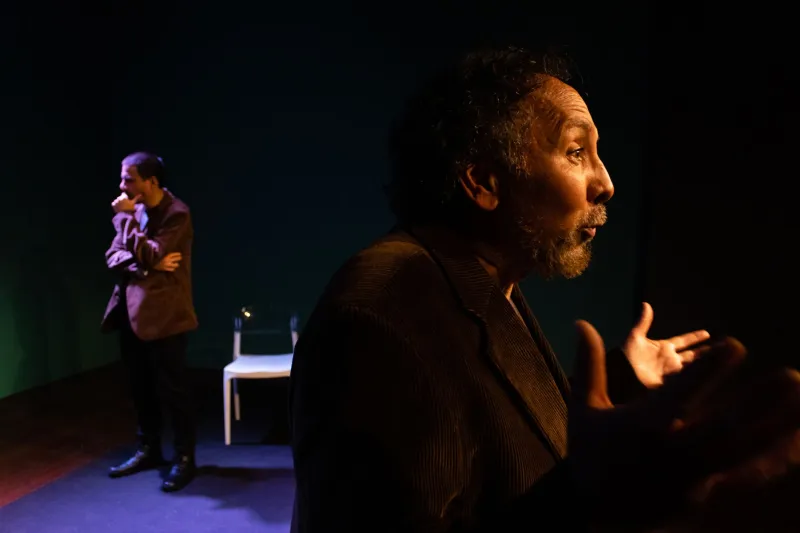
There's a moment near the end of a set by Chicago-based spoken word artist Dara Osei when the stage goes completely dark except for a single amber wash that creeps up from the floor. The poem she's reading is about grief — her mother, a hospital room, the particular silence of a Tuesday morning. The light doesn't illustrate the words. It inhabits them. By the time she finishes, half the room is crying, and nobody's entirely sure whether it was the poem or the light that broke them open.
That's not an accident. That's a lighting designer doing their job at the highest possible level.
For a long time, spoken word events ran on the aesthetic equivalent of a shrug — a single spotlight, maybe a colored gel if you were lucky, and a whole lot of faith that the words would carry the room. And they did, often brilliantly. But something has shifted in the last few years. Lighting designers, projection artists, and visual storytellers are moving into the live lit space in a serious way, and the performances they're shaping are drawing audiences who might never have walked into a poetry reading before.
The Tech Is There. Someone Finally Decided to Use It.
It's not like the tools are new. Theatrical lighting technology has been sophisticated for decades. DMX-controlled LED rigs, projection mapping software, haze machines that interact with beams in ways that feel almost alive — all of it has existed in theater and concert contexts for years. What's changed is the appetite for bringing that vocabulary into literary spaces.
"The spoken word world was weirdly resistant to visual production for a long time," says Marcus Webb, a Brooklyn-based lighting designer who has worked with venues including the Nuyorican Poets Cafe and several touring live lit productions. "There was this idea that too much visual stuff was somehow cheating — like it meant the words weren't strong enough on their own. I get where that comes from, but I think it was also holding the art form back."
Webb started experimenting with what he calls "emotional cuing" — programming light shifts that respond not to stage directions but to the emotional arc of a piece. A poem that builds from quiet memory to rage might move through a slow cool blue into a saturated, almost violent red, not on a countdown but on feel. "It's closer to jazz than theater tech," he says. "You're listening and responding in real time."
Projection Mapping and the New Literary Stage
If responsive lighting is the evolution, projection mapping is the revolution. At its most basic, projection mapping throws images onto irregular surfaces — the folds of a curtain, the contours of a performer's body, a deliberately textured backdrop — to create environments that feel immersive rather than decorative.
Several high-profile live lit events on the coasts have started incorporating projection mapping in ways that go beyond mere atmosphere. At a recent sold-out event in Los Angeles, a collective called Verso Stage used projection to layer handwritten text fragments across the backdrop behind their performers — not captions, but visual echoes, words that rhymed with or contradicted what was being spoken aloud. The effect was disorienting in the best possible way, like reading and listening simultaneously.
"We wanted the visual layer to have its own argument," says Verso co-founder Sonia Reyes. "Not to illustrate the poem but to be in conversation with it. Sometimes the projections agree with what the poet is saying. Sometimes they push back. That tension is where the interesting stuff lives."
Tickets to that event started at $65. They sold out in under four hours.
Why Younger Audiences Are Responding
Here's the thing nobody in live lit wants to say out loud but everyone is thinking: Gen Z audiences grew up inside visual media. They are fluent in the grammar of image, color, and motion in a way that previous generations simply weren't. Asking them to sit in a bare room and receive a poem through sound alone isn't impossible — it's not even unpleasant — but it's also not playing to their full range of attention.
"I think there's a misconception that young audiences have short attention spans," says Webb. "What they actually have is high standards for sensory experience. Give them something that's visually as sophisticated as it is lyrically, and they will stay locked in for two hours. I've seen it happen."
Venue operators are noticing the same thing. Jamie Hollister, who programs literary events at a mid-sized black box theater in Austin, started investing in upgraded lighting infrastructure two years ago after noticing that their most visually produced events consistently outperformed their traditional setups in ticket sales and social media engagement.
"The photos and videos people were sharing from the visually designed shows were just stunning," Hollister says. "And that shareability translated directly into ticket sales for the next event. People wanted to be in the room because they knew the room was going to look incredible."
Premium Pricing and the Visual Justification
There's a practical business case here that's hard to ignore. Live literary events have historically struggled to justify ticket prices above the $20-$30 range — a ceiling that makes it nearly impossible to pay artists fairly, cover production costs, and keep venues financially viable. Visual production changes that math.
When an event looks and feels like an experience — when the room itself becomes part of the artistic statement — audiences accept, and even expect, premium pricing. The Verso Stage event in LA charged $65 and up. Marcus Webb has worked on touring productions where tickets cleared $90. The production value isn't just aesthetically meaningful; it's economically transformative.
"People will pay for beauty," says Reyes simply. "They'll pay for something that feels singular and intentional. What they won't pay for is something that looks like it was thrown together. The investment in visual design signals to the audience that the whole thing has been taken seriously."
The Balance Nobody Talks About
Of course, there's a version of this that goes wrong. Light shows that overwhelm the performer, projections that distract rather than deepen, visual choices that feel like they belong at a corporate product launch rather than a poetry event — all of it is a real risk when the technology starts driving the bus instead of serving the work.
The best lighting designers in this space are obsessive about that balance. Webb describes his role as "invisible architecture" — building a visual world that the audience feels without consciously registering. "If someone walks out and says 'the lighting was amazing,' I've half-failed," he says. "If they walk out and say 'that was the most moving thing I've ever experienced at a live event,' then I know the light did its job."
That's the standard this emerging discipline is setting for itself. Not spectacle. Not distraction. Something closer to what the best set design does in theater — creating a world so complete and so right that it becomes invisible, and in its invisibility, becomes everything.
The words are still the star. The light just knows how to make them shine.