No Fog Machine Required: How Bare-Bones Spoken Word Nights Are Packing Houses Coast to Coast

Somewhere between the LED backdrop and the third costume change, a lot of live lit audiences started quietly checking out. Not physically — they were still in their seats, still applauding at the right moments — but emotionally, they had left the building. The spectacle had swallowed the story.
Now, a countercurrent is pulling people back in. And it looks nothing like what you'd expect from a sold-out show.
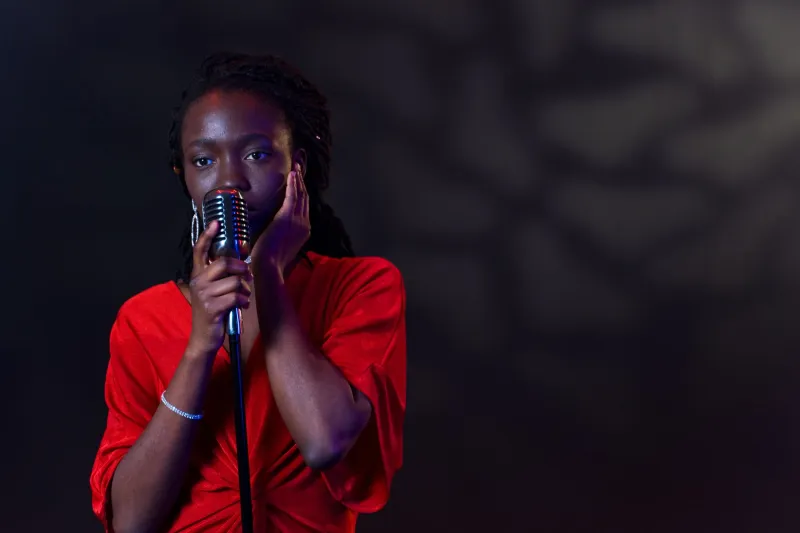
We're talking folding chairs. Exposed brick. A single microphone on a stand with no reverb on it. Maybe a handwritten sign out front. No green room riders. No theatrical lighting plot. Just a writer and a room full of people who showed up specifically because they heard there was nothing extra going on.
It sounds like an art school experiment. It's actually one of the most interesting business stories in live literary entertainment right now.
The Spectacle Fatigue Is Real
Let's be honest about what's been happening in the live lit space. As spoken word and literary performance have grown in cultural cachet — especially post-pandemic, when audiences came roaring back hungry for connection — a lot of producers responded the way producers tend to: by going bigger. More production value. More elaborate staging. More of everything, because more feels like a safer bet when ticket prices are climbing and competition for a Saturday night is fierce.
But something funny happened on the way to the grand spectacle. Audiences started talking. Not about the show — about the feeling they left with. And a lot of those conversations, especially online, started circling around a particular kind of disappointment that's hard to name but easy to recognize: the sense that you watched something impressive and felt almost nothing.
Spectacle, it turns out, has a ceiling. And a lot of live lit crowds hit it faster than producers anticipated.
"There's a moment in an over-produced show where your brain switches from feeling to evaluating," says one Brooklyn-based event organizer who has been running stripped-down reading nights for three years. "You stop listening to the words and start watching the lighting cues. That's the moment the artist loses you."
The Anti-Spectacle as a Marketing Move
Here's where it gets genuinely interesting from a business standpoint: the artists and producers leaning into minimalism aren't doing it because they can't afford production. Some of them are making a very deliberate, very calculated choice to strip everything away — and then marketing that absence as the main event.
Shows with names like "Just the Words" or "Nothing Extra" or simple location-based titles like "The Back Room Series" are popping up in cities like Chicago, Austin, Portland, and Philadelphia. Their promotional copy doesn't apologize for the lack of production. It leads with it. "No staging. No gimmicks. No distractions. Just writers who are really, really good." That kind of pitch is landing hard with audiences who have been burned by over-promised, under-delivered spectacle.
The FOMO calculus has flipped. Instead of "you don't want to miss this incredible production," the draw is "you don't want to miss this room while it still feels like this." Intimacy, in other words, has become the luxury product. And as we've seen in other corners of the entertainment industry, scarcity and authenticity sell.
Tickets to some of these bare-bones nights are moving as fast as — sometimes faster than — their more elaborately produced counterparts. Word of mouth is doing the heavy lifting, because when a show genuinely moves someone, they tell everyone.
What Artists Are Getting Out of It
For the writers themselves, the stripped-down format isn't just an aesthetic choice. It's often a relief.
The pressure to perform within a production — to hit marks, to sync with sound cues, to compete with your own backdrop — pulls energy away from the actual work of being present with an audience. When you remove all of that, something shifts. Artists report feeling more connected to the crowd, more willing to take risks mid-performance, more able to respond to the room rather than execute a plan.
That spontaneity shows up in the work. Audiences feel it. And the resulting emotional charge — that live-wire sense that anything could happen — is exactly what no amount of production design can manufacture.
There's also a practical element worth naming. Lower overhead means more sustainable event economics. A night that costs $400 to produce and sells 60 tickets at $20 apiece is a fundamentally different financial situation than a show that requires $8,000 in production and needs to move 300 tickets to break even. The anti-spectacle model, for many producers, isn't just a trend. It's a more survivable business.
The Audience Showing Up
Who's filling these rooms? The demographics are worth paying attention to.
Younger audiences — the Gen Z and younger millennial crowd that live lit has been working hard to court — are showing up in significant numbers for stripped-down events. This tracks with broader cultural behavior patterns: a generation that grew up over-saturated by algorithmically optimized content is actively seeking out experiences that feel unfiltered and real. A writer standing in a room with nothing between them and the audience hits different than a carefully art-directed production, however beautiful.
Older audiences who came up in the slam poetry and open mic tradition are also returning to something familiar — and finding that the rawness they loved still lands, maybe more powerfully than ever against a backdrop of everything else competing for their attention.
What This Means for the Future of Live Lit
Nobody's predicting the death of production design. Elaborate, visually stunning literary performances still have a devoted audience and a real place in the ecosystem. The two modes — spectacle and anti-spectacle — can and do coexist.
But the success of the stripped-down movement is sending a clear signal to producers at every level: audiences are sophisticated enough to tell the difference between production value that serves the work and production value that substitutes for it. The ones who can't tell the difference are increasingly not the ones buying tickets.
The most exciting shows happening in literary entertainment right now might be the ones with the smallest budgets. A folding chair. A good mic. A writer with something true to say. Turns out that's still — maybe especially now — enough to pack a room.
Glitter, after all, doesn't have to come from a fog machine. Sometimes it comes from the moment a line lands in a quiet room and you can hear the whole audience exhale at once. That's the real show. And people are paying good money to be in the room when it happens.