Lit on Tour: How Authors Are Hitting the Road with Full-Scale Theatrical Productions
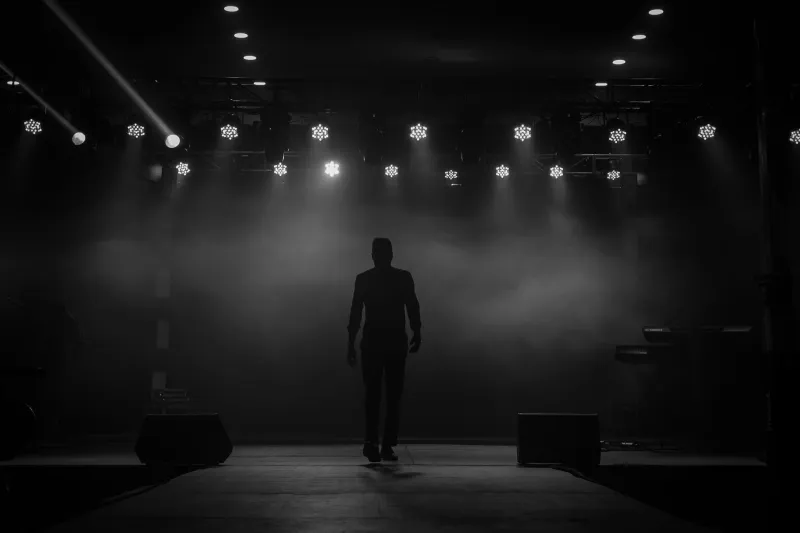
Picture this: a sold-out theater in Portland, Oregon. Seventeen hundred seats, not one of them empty. The lights drop. Original music swells. And then a novelist — not a rock star, not a stand-up comedian, but a novelist — walks into a single spotlight and begins to perform their book.
This is not a fantasy. This is what literary touring looks like in 2024, and it's rewriting every assumption we had about what authors do after a book comes out.
The Concert Tour Comes to Literature
For most of publishing history, the book tour was a necessary indignity. Authors shuffled from city to city, sat behind tables at Barnes & Noble, read for 20 minutes to an audience of 12, signed some books, and flew home exhausted. The whole enterprise was more promotional obligation than artistic event.
That model is crumbling — and something genuinely exciting is rising in its place.
Poet and novelist Ocean Vuong has become one of the most compelling examples of this shift. His readings aren't readings, exactly — they're performances, deeply felt and theatrically aware, that leave audiences genuinely shaken. Tommy Orange, author of There There, has spoken openly about the ways live performance has expanded his relationship to his own work, allowing him to inhabit his characters in front of an audience in ways the printed page can't replicate. Carmen Maria Machado, whose memoir In the Dream House translates almost uncannily to spoken performance, regularly commands rooms that feel less like bookstore events and more like immersive theater.
These writers aren't just reading their books. They're staging them.
What "Theatrical" Actually Means Here
Before we go further, let's define terms, because "theatrical production" covers a wide spectrum when it comes to literary touring.
At the more accessible end, you have elevated staged readings — an author at a podium, yes, but with deliberate lighting design, original music or sound design playing underneath, and perhaps a director who has worked with the author to shape pacing and presence. This is more than a reading and less than a full production, and it's achievable on a modest budget.
In the middle sits the author-plus-ensemble format, where a writer performs alongside musicians, dancers, or actors who bring supporting characters or thematic elements to life. This is the model poet Saul Williams has worked in for years, and it's increasingly being adopted by prose writers who want to add dimension to their live shows.
At the full theatrical end, you have productions with sets, costumes, multiple performers, and a director with a real production budget. These are closer to one-person shows or chamber theater pieces than traditional readings, and they require serious investment — but they also command serious ticket prices and generate press coverage that a standard book tour simply cannot.
Why This Works (And Why It Works Right Now)
The timing of this trend isn't accidental. A few forces are converging at once.
First, readers are starving for community. After years of pandemic isolation and algorithmic social media that flattens genuine connection, the experience of sitting in a dark room with hundreds of strangers who all love the same book is genuinely moving. Authors who can create that shared experience are offering something irreplaceable.
Second, the economics of traditional publishing are forcing authors to diversify. Advances are down across much of the industry, royalties take forever to arrive, and the midlist author's financial situation has never been more precarious. Live performance, done well, is a genuine revenue stream — one that can be controlled and scaled in ways that book sales cannot.
Third, social media has fundamentally changed how literary audiences discover and bond with authors. A clip of Ocean Vuong performing a passage from On Earth We're Briefly Gorgeous will reach more potential readers in 24 hours than a month of traditional press coverage. Authors who perform compellingly are content machines in the best possible sense.
A Practical Roadmap for Emerging Authors
If you're a writer looking at this trend and thinking I want that — good. Here's how to start building toward it without a major publishing contract or a six-figure production budget.
Step one: Develop your performance voice before you need it. Spoken word open mics, community theater, improv classes, storytelling nights like The Moth's StorySLAM — all of these will build the muscle memory you need to hold an audience. Reading your own work aloud is a skill, and like all skills, it requires practice in front of real people. Start now, even if your book isn't out yet.
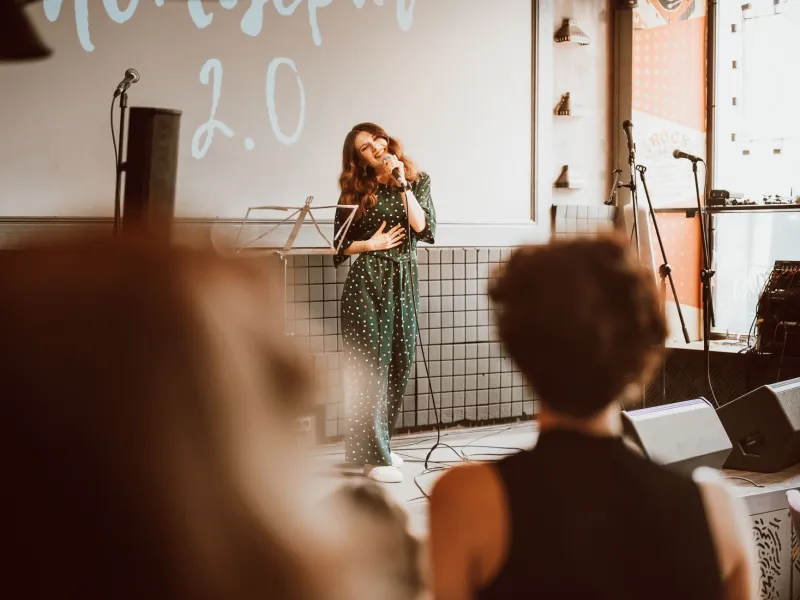
Step two: Start small and document everything. Book a 50-seat venue. Design the lighting deliberately — even if that just means renting two good lamps and placing them with intention. Have someone film it professionally. These early performances are your audition reel for larger venues and for the literary festivals that book featured readers a year in advance.
Step three: Find collaborators who elevate your work. A musician who can create an original score for your reading. A director who can give you objective feedback on your stage presence. A designer who can create a visual identity for your tour that looks as polished as a concert poster. You don't need a big budget — you need creative people who believe in the project.
Step four: Pitch literary festivals aggressively. Events like the Brooklyn Book Festival, the Texas Book Festival, AWP, Lit Crawl, and dozens of regional counterparts are always looking for authors who can perform, not just read. A well-produced video of you doing exactly that is worth more than any press kit.
Step five: Treat every event like a show, not an obligation. This is the mindset shift that separates authors who build cult followings through live performance from those who merely survive their book tours. Every room deserves your full creative investment, whether it seats 25 or 2,500.
The Stage Is Waiting
Literature has always been, at its core, an oral art form. Homer didn't hand out scrolls — he performed. The distance between the writer and the audience is a relatively recent invention, and it's one that the most exciting authors working today are actively dismantling.
The page will always matter. But the stage? The stage is where your words can live inside someone else's body for a night, where a sentence can make a room go completely silent, where your book becomes an event that people will talk about for years.
That's not just art. That's a career. And it's yours to build.