Small Stage, Big Heart: Why Indie Literary Venues Are the Most Profitable Rooms Nobody's Talking About
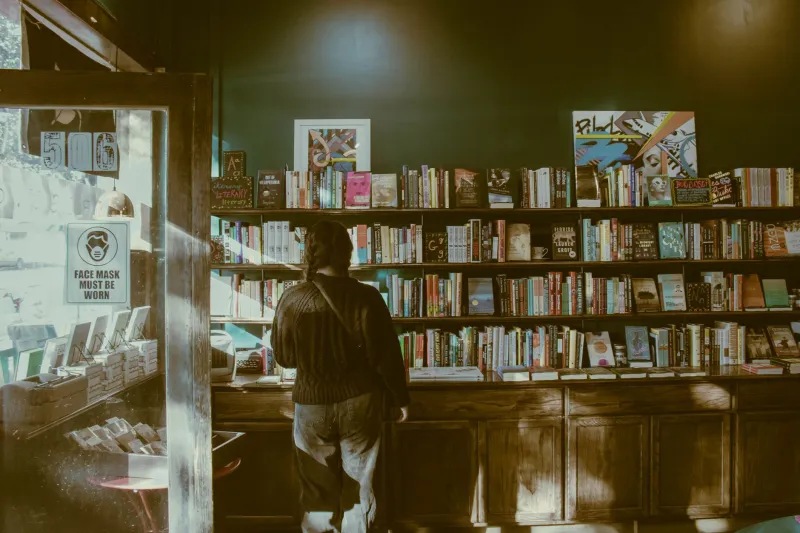
Forget the arena. The most interesting business model in live entertainment right now fits about eighty people and smells faintly of old paperbacks.
All across the US, a specific kind of space is quietly thriving: the independent literary venue. We're talking about bookstore back rooms that double as performance stages on Friday nights, pop-up salons in repurposed warehouses, tiny black box theaters that host poetry nights alongside their regular programming. These are not glamorous operations by conventional metrics. There's no pyrotechnics budget. The green room is often a storage closet.
And yet — they're making money. They're building loyal communities. And in an entertainment landscape increasingly dominated by scale, they're offering something that no mega-venue can replicate: the feeling that what's happening in this room, tonight, matters.
So how does it actually work? We spent time talking to venue owners, performers, and the audiences who keep coming back, and what we found is a masterclass in sustainable creative economics.
The Intimacy Premium
Here's the counterintuitive truth at the heart of this story: small is not a limitation. For the right audience — and the right performer — small is the entire point.
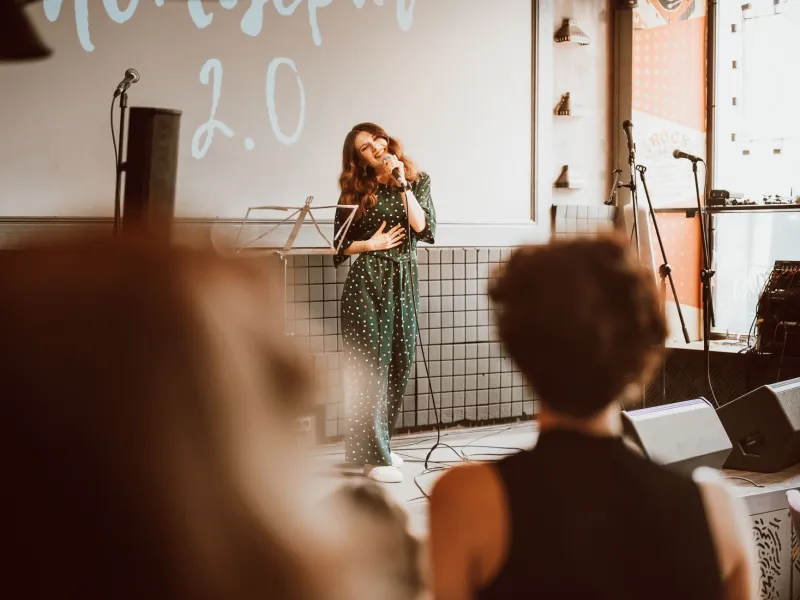
When Dani Okafor opened her Chicago venue, a 75-seat literary performance space called The Margin, she made a deliberate choice not to grow. "Every time I thought about expanding, I'd go to a big literary festival and watch people in the back row checking their phones," she said. "That's not the experience I'm selling. I'm selling the front row feeling, even when you're in the last row."
That intimacy premium shows up directly in pricing. Independent literary venues can charge more per ticket — not less — than larger spaces, because the experience is genuinely rarer and more personal. Audiences understand they're paying for access, not just attendance. A $35 ticket to a 60-person poetry show in a candlelit bookstore hits differently than a $35 seat in a 2,000-person hall, and audiences know it.
For performers, this also means better per-show economics than you might expect. A sold-out run of five nights at an 80-seat venue can generate meaningful revenue while keeping overhead modest. The math isn't sexy, but it works.
Multiple Revenue Streams, One Intimate Room
The venue operators who are genuinely thriving aren't relying on ticket sales alone — and that's a crucial piece of the puzzle for any creator thinking about building in this space.
The most successful indie literary venues have learned to layer their revenue streams with real intentionality. A spoken word night becomes a workshop series. The workshop series feeds a membership program. The membership program creates a core community that shows up for everything. Add book sales, merch, the occasional private event rental, and a well-run small venue starts to look less like a passion project and more like a real business.
Rodrigo Vance, who runs a rotating pop-up literary salon called Underlined in Brooklyn, described his model as "a community with a programming habit." His monthly newsletter has 6,000 subscribers. His events sell out in hours. His secret, he says, is treating every event like it's the last one — which means every detail matters, every performer is briefed and supported, and every audience member leaves feeling like they were part of something.
"People don't come back because the show was good," he told us. "They come back because they felt something. And they felt like the people running the room cared about them being there."
What Performers Can Build Here
For writers and spoken word artists looking to build sustainable careers, indie literary venues represent something genuinely valuable: a place to develop your craft in front of real humans, build a local following, and establish yourself as a performer before you try to scale.
The relationship between a performer and a beloved small venue is one of the most powerful career accelerants in this world. When a venue's audience trusts the programming, being featured there is an implicit endorsement. You're not just getting a booking — you're getting an introduction to a community that's already opted in to caring about literary performance.
Practically speaking, here's what that looks like for a working artist:
Residencies over one-offs. The venues doing the most interesting work are moving away from single-night bookings toward residency models — a performer comes back monthly, builds familiarity with the audience, and deepens the work over time. This is better for the venue (reliable programming) and better for the artist (a home base).
Workshops as a revenue layer. Most indie venues are hungry for workshop programming. If you can teach — and most experienced performers can — this is a direct line to supplemental income that also builds your audience.
Co-creation over performance. The venues thriving right now aren't booking performers; they're building relationships with artists who feel genuine ownership over the space. If you walk into a venue thinking about what you can contribute to the community rather than what you can extract from the booking, you will stand out immediately.
The Bigger Picture
There's something almost countercultural about the indie literary venue scene in 2024 — and that's exactly why it's resonating so hard. At a moment when so much entertainment is optimized for scale, virality, and frictionless consumption, these spaces are asking audiences to show up, pay attention, and sit with something.
The audiences are saying yes. Loudly.
For creators and venue builders alike, the lesson is the same: intimacy is not a consolation prize for not being big enough. It's a distinct product with a distinct value, and there is a real, growing, passionate market for it. The glitter in this world isn't on the stage — it's in the room, in the conversation after the show, in the text someone sends their friend that says you have to come to this thing with me next month.
That's the business. And it's a good one.