A Million Views and an Empty Room: The Cold Truth About Spoken Word's Virality Problem
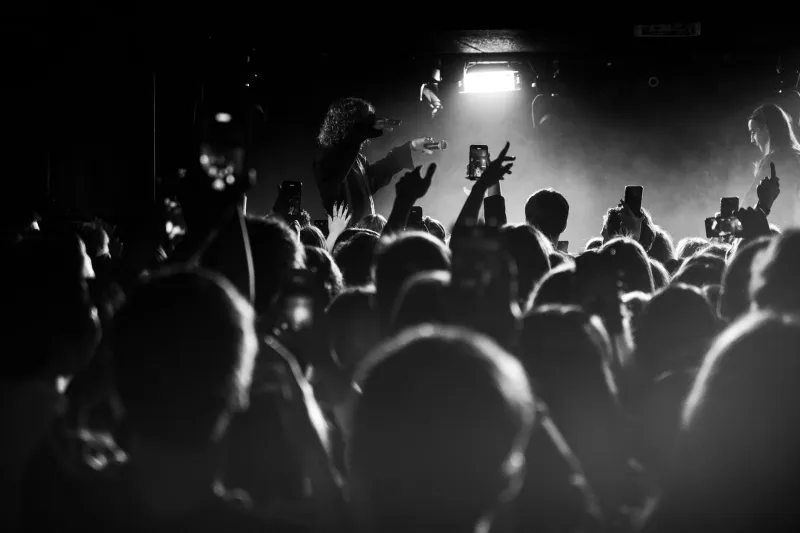
Picture this: a poet drops a 60-second clip on Instagram. The words hit like a freight train. Comments flood in. Shares stack up. By Thursday morning, the thing has two million views and a feature on three different literary accounts with six-figure followings. The artist is buzzing, their DMs are chaos, and their manager is already talking about a tour.
Then ticket sales open.
Crickets.
This isn't a rare horror story. It's practically a rite of passage in spoken word circles right now, and it's quietly breaking the hearts—and bank accounts—of some genuinely talented artists who believed that a viral moment was the same thing as a built audience. Spoiler: it is absolutely not.
Why the Algorithm Loves You and Your Fans Don't (Yet)
Social media platforms are designed to surface content, not people. When a poem goes viral, what's actually spreading is a feeling—a 58-second emotional experience that the algorithm has decided is optimized for engagement. The viewer doesn't necessarily connect that feeling to a specific human being standing on a stage in their city on a Saturday night.
Think about how many times you've rewatched a clip, sent it to your group chat, and then—when pressed—couldn't remember the creator's name. That's not a failure of memory. That's just how the feed works. Virality is frictionless. Buying a ticket, driving to a venue, and sitting in a room with strangers requires actual commitment.
The metric that matters here isn't views. It's conversion rate—the percentage of people who go from passive viewer to active ticket-buyer. For most viral spoken word moments, that number is brutally, humblingly low. Industry folks who've been watching this space closely put average social-to-ticket conversion rates somewhere between 0.5% and 2% for artists without an established live presence. That means two million views might net you, on a good day, 40,000 potential ticket-buyers—but only if those viewers are in the same city, know the show exists, and actually follow through.
Math is cold.
The Difference Between a Fan and a Follower
Here's a distinction that the live lit world needs to tattoo somewhere visible: a follower is not a fan. A follower clicked a button once because an algorithm put something in front of them at the right moment. A fan is someone who has already shown up—who has sat in a room, bought a book, attended a virtual event, or otherwise made a choice that cost them something, even if it was just 45 minutes of their evening.
Repeat attendance is one of the most underrated metrics in the live literary space. Artists who are quietly selling out 200-seat venues without ever going viral tend to have something specific in common: a core audience that comes back. These are people who've seen the performer live at least once, who feel a personal connection that no algorithm can manufacture, and who tell their friends—not by sharing a link, but by saying "you have to come with me to this thing."
Word-of-mouth from a live experience is categorically different from a social share. It carries social stakes. When someone tells a friend to come to a show, their own taste and judgment are on the line. That's a much stronger conversion mechanism than a reshare into the void.
What Actually Bridges the Gap
So what does work? What are the artists and live lit entrepreneurs who've cracked this actually doing?
They treat social media as a top-of-funnel tool, not a destination. The viral clip isn't the win—it's the introduction. Smart performers use that moment of attention to pull people into something with more friction and more intimacy: an email list, a Patreon, a private community, a free live-stream event where they can actually interact with the audience. Each step increases investment and deepens the relationship.
They localize aggressively. A viral clip has no geography. A show does. Artists who successfully convert online attention into ticket sales tend to be obsessive about geo-targeted content in the weeks leading up to a performance. That means city-specific posts, local collaborations, partnerships with independent bookstores and coffee shops, and showing up in community spaces that their target audience already inhabits.
They create content that references the live experience specifically. Instead of just posting polished performance clips, they post behind-the-scenes footage from rehearsal, clips of audiences reacting, stories from past shows. This does something crucial: it makes the experience of attending feel real and desirable to someone who's only ever seen the work on a screen.
They build a pre-sale ritual. Some of the most consistent live lit sellers in cities like Chicago, Atlanta, and Portland have cultivated an audience that treats early ticket access as a cultural event in itself. Limited pre-sales, exclusive add-ons for early buyers, and genuine scarcity (not manufactured scarcity—actual small venues) create urgency that a viral clip never can.
The Long Game Nobody Wants to Play
Here's the uncomfortable truth that sits underneath all of this: building a live audience takes longer than going viral. It requires showing up in rooms before those rooms are full, doing the unglamorous work of community-building, and resisting the seductive lie that online numbers are a proxy for real-world demand.
The artists who are genuinely thriving in the live lit space right now—the ones who can announce a show and sell it out in 48 hours—almost universally have years of consistent live performance behind them. The viral moment, when it comes, lands differently for them because it's landing on top of an already-warm audience. It's jet fuel, not a foundation.
For everyone else—for the poet whose clip just hit a million views and who is now staring at a ticket sales dashboard that isn't moving—the lesson is the same: don't mistake the spotlight for the stage. One is a flash. The other is built, night by night, in rooms where real people showed up and felt something they couldn't get from a scroll.
That's the work. And it's worth doing.