The Afterglow Economy: How Smart Lit Venues Are Turning Post-Show Magic Into Real Money

It's 10:47 PM on a Thursday in Silver Lake, and the show technically ended twenty minutes ago. But nobody has left.
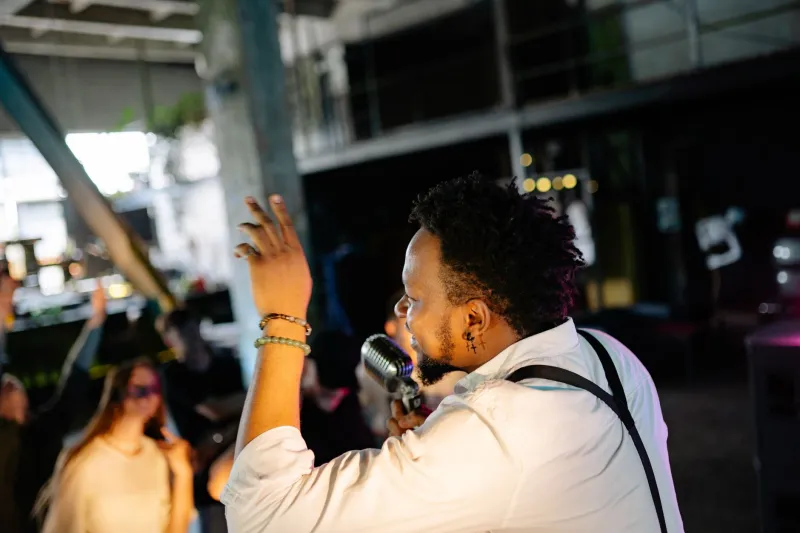
About sixty people are clustered in small groups near the bar, near the merch table, near the makeshift photo wall draped in gold fabric. A performer is in the corner holding court with eight audience members who paid an extra $45 for a post-show salon — a structured, intimate conversation with a glass of wine and zero cameras. Two more people are waiting near the stage door with laminates around their necks, clutching copies of a chapbook, ready for a meet-and-greet that sold out in eleven minutes when it went on sale two weeks ago.
The event — a monthly spoken word series called Residue — grossed more from post-show add-ons this evening than it did from general admission tickets. And the team behind it is not surprised.
"We realized pretty early that ticket sales were just the beginning," says co-founder and producer Yara Okonkwo. "The audience is at peak emotional investment right after the show. That's not the time to send them home. That's the time to invite them deeper."
The Window Nobody Was Monetizing
For years, live lit operated on a simple, fragile financial model: sell tickets, cover costs, hope the bar tab helps. The in-between moments — the post-show glow, the lingering audience energy, the electric sense of shared experience that hangs in the air after a great performance — were treated as ambient atmosphere. Lovely, but not a line item.
That's changing fast.
Across the country, from Brooklyn to Nashville to Seattle, spoken word events and literary performance venues are building structured revenue streams around the emotional residue of live performance. They're packaging intimacy, selling access, and discovering that audiences are not just willing to pay for these experiences — they're actively seeking them out.
The numbers back this up. A 2023 survey by the National Independent Venue Association found that ancillary revenue — merchandise, VIP packages, and experiential add-ons — was one of the fastest-growing income categories for small performing arts venues. Spoken word and literary events, which have historically lagged behind music venues in monetization sophistication, are now catching up quickly.
What the Menu Actually Looks Like
The range of post-show offerings being developed by live lit producers is broader than you might expect, and pricing varies significantly by market and audience.
Meet-and-greets are the entry point. Basic access — a photo, a signature, ninety seconds with the performer — typically runs $25 to $65 depending on the artist's profile and the event's prestige. At higher-end literary events in New York and Los Angeles, that number climbs past $100 for established names.
Post-show salons are where things get interesting. These are structured small-group conversations — usually capped at ten to fifteen people — that go deeper than a standard Q&A. Participants get real dialogue, unfiltered access to the artist's process, and the feeling of being inside something exclusive. Pricing ranges from $40 to $150 per person, with the higher end often including a drink and a signed copy of the performer's work.
VIP early access flips the model to the front of the show: dedicated seating, pre-show artist access, curated programming notes, and sometimes a brief pre-performance Q&A. This package tends to appeal to a slightly different buyer — the literary enthusiast who wants context and connection, not just the performance itself.
"We started thinking about it like a restaurant," says Marcus Webb, who produces the Lit After Dark series in Atlanta. "You don't just sell the entrée. You sell the whole experience — the amuse-bouche, the dessert, the digestif. The show is the main course. Everything around it is where the margin lives."
The Artist Side of the Equation
For performers, this shift requires a recalibration of how they think about their own labor. Post-show engagements are work — emotionally demanding work, often done at the moment of peak exhaustion. Negotiating fair compensation for that work is still a developing conversation in the live lit community.
The most sustainable models tend to split post-show revenue clearly between the venue and the artist, with the artist receiving the majority of income from their direct-access offerings. Some performers are now negotiating post-show packages as part of their booking contracts, treating the salon or meet-and-greet as a separate engagement with its own fee structure.
"I had to get comfortable understanding that my time after the show has value," says poet and performer Simone Achebe, who performs regularly on the East Coast circuit. "It took me a while to stop feeling like charging for it was somehow less authentic. But these conversations — the real ones, after the lights come up — those are some of the most meaningful parts of what I do. They deserve to be compensated."
Logistics That Make It Work
The operational side of running post-show experiences is where a lot of venues stumble. Crowd management, timing, and clear communication are everything.
Successful producers emphasize a few non-negotiables: post-show offerings must be clearly defined and sold in advance, never pitched to a general audience at the end of the night. Capacity limits must be real and enforced — scarcity is part of the value proposition. And the physical space must be designed to support the experience, whether that means a designated lounge area, a private room, or even just a corner of the venue sectioned off with good lighting and a velvet rope.
Because in the afterglow economy, the atmosphere is the product. And nobody is buying a moment that feels like an afterthought.