No Script, No Safety Net: Why the Spoken Word Scene Is Falling Hard for Improv
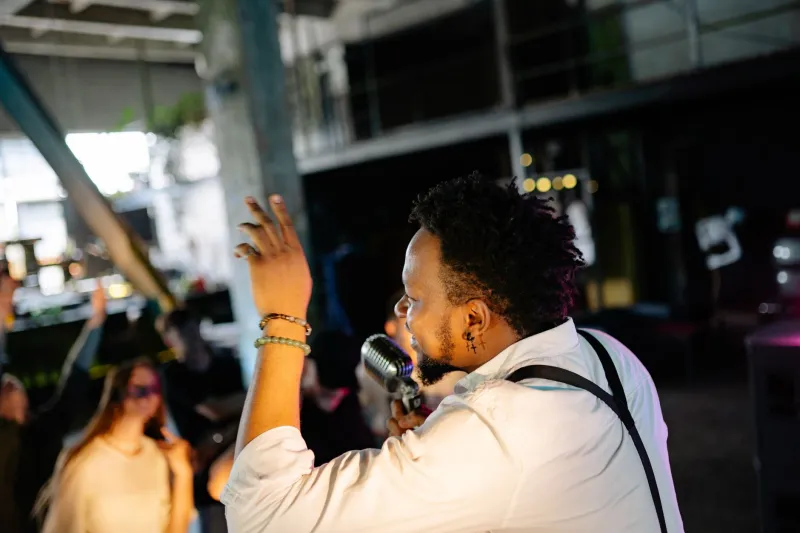
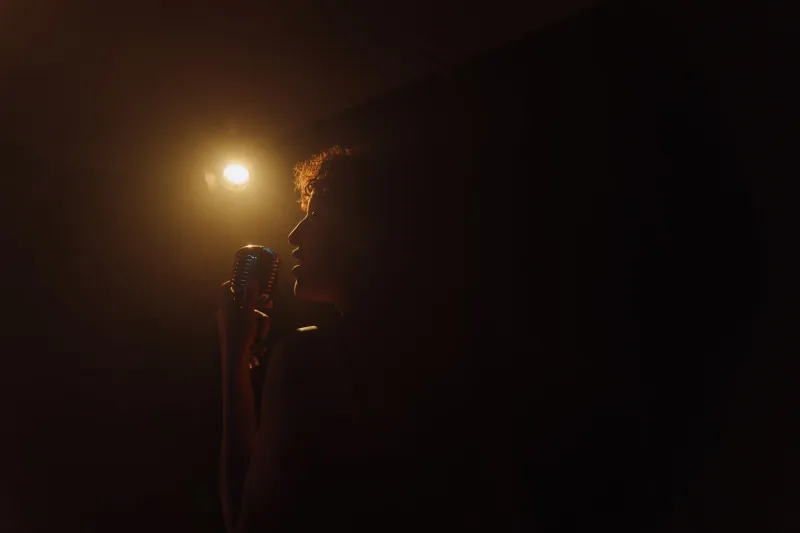
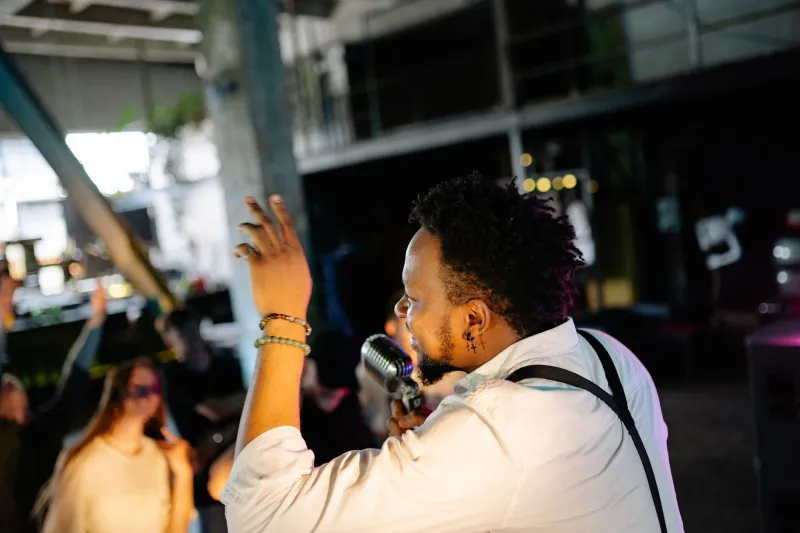
The performer walks to the mic. No notes. No chapbook. No rehearsed opener to settle the nerves.
She asks the audience for three things: a color, a year, and the name of someone they've lost. The room goes quiet in that particular way rooms go quiet when they sense something genuinely unpredictable is about to happen. Someone calls out "amber." Someone else says "2011." A third voice, barely above a whisper, offers a name.
And then she starts talking. Building something in real time from those three raw materials and whatever is already living inside her. The poem that emerges — if you can even call it that — is rough in places, luminous in others, and completely unrepeatable. When it ends, the applause has a different quality than it does after a polished, memorized set. It sounds like relief. Like witnessing.
This is what's drawing audiences to improvised spoken word right now, and it's pulling them in hard.
The Problem With Perfect
Spoken word has always prided itself on authenticity. The genre's roots — slam poetry, open mic culture, the oral traditions it draws from — are built on the premise that real experience, expressed directly, carries a power that no amount of literary polish can manufacture.
But somewhere in the professionalization of the form, something got a little too smooth. Touring performers with tightly rehearsed sets, identical night after night. Slam competitors with pieces engineered for maximum scoring impact. Content built to land on video, not in a room.
Audiences started to feel it. Not consciously, maybe, but in the way you feel the difference between a conversation and a presentation — even when the presentation is technically excellent.
"There's a kind of deadness that can creep into a memorized set," says Theo Carrasco, a spoken word performer and improv instructor based in Chicago who has been blending the two disciplines for the past four years. "You've said these words hundreds of times. Your body knows the cadence. But the spontaneous electricity that was there when you wrote it — that's not always there when you perform it. Improv puts the electricity back."
The Training Ground Nobody Expected
The crossover between improv theater and spoken word performance isn't entirely new — but it's accelerating in ways that are reshaping both disciplines.
Performers like Carrasco are increasingly seeking out improv training not to become comedians, but to develop specific skills: listening without anticipating, building from unexpected material, recovering gracefully when a thread breaks, and staying present in the moment rather than in their heads.
"The 'yes, and' principle from improv is genuinely transformative for spoken word," says Naomi Vance, a poet and teaching artist who runs workshops at a literary center in Portland, Oregon. "It teaches you to receive what the room is giving you and build on it, instead of just delivering what you planned regardless of what's actually happening."
Vance began incorporating improv exercises into her performance workshops three years ago and says the shift in student confidence has been dramatic. "People who were terrified of forgetting a line suddenly discovered that forgetting the line could be the most interesting thing that happened all night, if you know how to work with it."
What the Audience Feels
The audience experience of improvised spoken word is genuinely different from watching a polished, rehearsed set — and not just because of the content. It's the shared awareness of risk that changes the room.
When an audience knows that what they're watching is being created in real time, they become collaborators rather than spectators. Their energy, their responses, even their silence becomes part of the creative material. That shift in relationship is something that even the most electrifying memorized performance can't fully replicate.
"You're not watching someone perform something," says Dani Reyes, a regular attendee of the Unscripted Lit series in Denver, which features improvised spoken word as its primary format. "You're watching someone think and feel in public. It's completely different. I've cried at things that weren't even finished sentences."
The Unscripted Lit series, which launched in 2022, now sells out regularly, with a waitlist for most shows. Producer Kira Sato says the audience demographics skew younger than traditional spoken word events — heavily Gen Z and younger millennials — and that first-time attendees frequently cite the "anything could happen" quality as their primary draw.
"They've grown up with content that's endlessly optimized," Sato says. "Everything they consume online has been edited, filtered, and A/B tested. When they see something that genuinely can't be rewound or retried, it hits differently."
The Craft Inside the Chaos
Here's what the best improvised spoken word performers will tell you: it only looks effortless because the preparation is invisible.
Strong improvisational performance in the literary space requires deep reserves of material — images, rhythms, emotional memories, linguistic patterns — that have been developed and internalized through years of writing practice. The improv isn't a replacement for craft. It's craft operating at a different speed.
"People see no script and think there's no work," says Carrasco. "But I've put in ten thousand hours so that when I stand up there with nothing, I'm not actually working with nothing. I'm working with everything I've ever written and felt and studied, just in a different order."
The semi-improvised format — where a performer has a loose structural framework but fills it with spontaneous content — is currently the most accessible entry point for artists exploring this territory. It preserves the safety of a known shape while opening up space for genuine surprise within it.
And right now, in a live performance landscape that sometimes feels over-curated and over-produced, surprise might be the most valuable thing a performer can offer. No glitter required — just the raw, unrepeatable shimmer of something happening for the very first and only time.