When the Room Fights Back: How the Best Spoken Word Artists Turn Chaos Into Gold
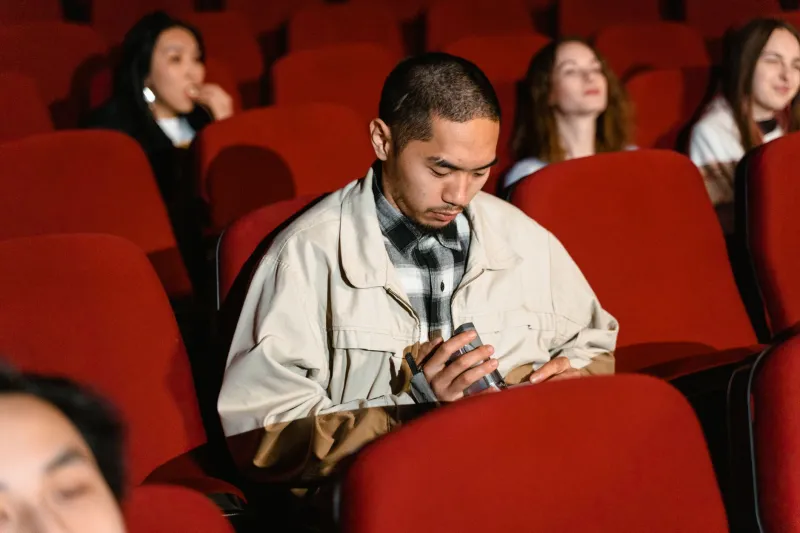
Somebody's phone goes off mid-stanza. A drunk guy in the third row decides your poem about your mother is the perfect moment to shout something unintelligible. A table near the back erupts in laughter at exactly the wrong beat. For most performers, that's the nightmare scenario — the moment the carefully rehearsed thing falls apart in real time.
But ask the poets who've been doing this for a decade or more, and you'll hear something surprising: some of them wait for it.
"The heckler is basically handing you a gift wrapped in sandpaper," says Marcus Teel, a Chicago-based spoken word artist who's performed everywhere from basement open mics to the main stage at the National Poetry Slam. "It's uncomfortable. It's ugly. But if you know what to do with it, you just got handed the most alive moment of the whole night."
That reframe — disruption as opportunity rather than disaster — is something the best performers in live lit have quietly been building into their practice for years. And in a scene where authenticity is the whole currency, there may be no more authentic moment than the one nobody planned.
The Psychology of the Unscripted Moment
Here's the thing about a live audience: they know when you're performing at them versus performing with them. The most technically polished set in the world can still feel like watching someone recite a grocery list if there's no genuine electricity between the stage and the seats. Disruption — whether it's a heckle, a coughing fit, or a chair scraping across a hardwood floor at the worst possible second — punctures the fourth wall in a way that nothing scripted ever could.
Sports psychologists call it "the crucible moment" — the point where pressure either breaks a competitor or reveals what they're actually made of. Live performance has its own version of this, and audiences feel it viscerally. When a poet stumbles on a heckle and finds their footing, the room doesn't just laugh or applaud. They bond with that performer in a way that a flawless delivery rarely achieves.
"People remember the recovery more than the performance," says Delia Okafor, a New York City slam poet and teaching artist who runs workshops specifically on improvisation for spoken word performers. "I've had sets where everything went exactly as planned and the crowd was polite. I've had sets where someone yelled something rude in the middle of my third piece and I turned it into a five-minute conversation with the room, and people still talk about that night two years later."
Reading the Room: Gift vs. Genuine Threat
Not all disruptions are created equal, and conflating them is where performers get into trouble. There's a meaningful difference between a tipsy audience member who's enthusiastically (if badly) engaged, a genuinely hostile voice trying to derail you, and someone who's simply oblivious. Getting that read wrong — treating an overzealous fan like a threat, or laughing off something that's actually aggressive and targeted — can tank a set faster than the original interruption.
Experienced performers develop what Teel calls "the scan" — a quick, almost unconscious assessment of intent, energy, and crowd temperature that happens in the first second after something goes sideways.
"If someone's being disruptive because they're excited and drunk and they love the vibe, that's material," he says. "If someone's being disruptive because they want to make you feel small or because they're targeting something specific about who you are — that's a different situation and you don't owe that person a platform. You can shut it down cleanly and the crowd will be with you."
Okafor agrees, and adds a third category that performers often underestimate: the accidental disruption. "A baby starts crying. Someone's phone plays that full ringtone. A server drops a tray. The instinct is to power through and pretend it didn't happen, but that's almost always the wrong call. Acknowledge it. Make it human. The audience is already thinking about it — you might as well make it yours."
Why Some Artists Are Actively Courting Chaos
There's a growing cohort of spoken word performers who aren't just prepared for disruption — they're engineering environments where it's more likely to happen. Longer Q&A segments woven into the performance itself. Explicit invitations for audience call-and-response. Staging that puts the performer in the middle of the crowd rather than elevated above it. Sets structured loosely enough to be genuinely redirected by audience energy.
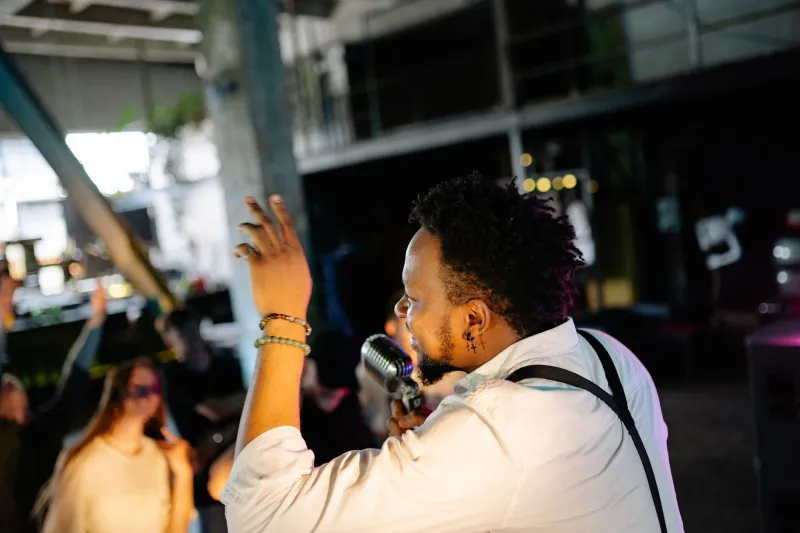
Los Angeles-based poet and performer Javi Reyes has built an entire show format around this principle. His monthly residency at a Silver Lake venue is deliberately designed to feel more like a conversation than a concert. "I've stopped thinking about interruption as the thing that breaks the show," he says. "The show is the interruption. The poem is just the starting point."
This philosophy has a practical upside beyond the artistic one: it's nearly impossible to recreate, which means every night is genuinely singular. In an era when a full performance can be recorded on a phone and watched on TikTok the next morning, the thing that still gets people to buy tickets is the promise of something that can't be captured. Chaos, handled brilliantly, is that promise made good.
Building the Skill: Improv as Craft
None of this happens by accident. The performers who make it look effortless have usually put in serious time developing improvisational instincts — often in spaces that have nothing to do with poetry. Improv comedy classes, yes, but also debate training, teaching, bartending, street performance, and community organizing. Anything that puts you in a room where you have to think on your feet and read a crowd in real time.
Okafor's workshops for spoken word artists borrow heavily from improv theater's "yes, and" framework — the idea that you accept whatever the scene gives you and build on it rather than blocking or ignoring it. Applied to live lit, it means treating the heckle, the mishap, the unexpected laugh as new material rather than interference.
"The goal isn't to have a comeback ready," she explains. "The goal is to be present enough that the right response just appears. That only comes from practice and from actually trusting yourself in the moment."
The Glitter in the Grit
There's something deeply on-brand about all of this for the spoken word scene right now. In a cultural moment obsessed with polish and curation, the rooms that are genuinely buzzing are the ones where something real might happen. Where the performer isn't behind glass. Where the night could go sideways in a way that makes a great story.
The heckler, it turns out, might be the most honest person in the room. They're the proof that you're not watching a recording. They're the reminder that this is live, that it matters, that it could all fall apart — and that the person on that stage is good enough to hold it together anyway.
That's not a threat to the performance. That's the whole reason to show up.