Reinvention Is the Real Art Form: How Spoken Word's Most Durable Careers Are Built on Act Two
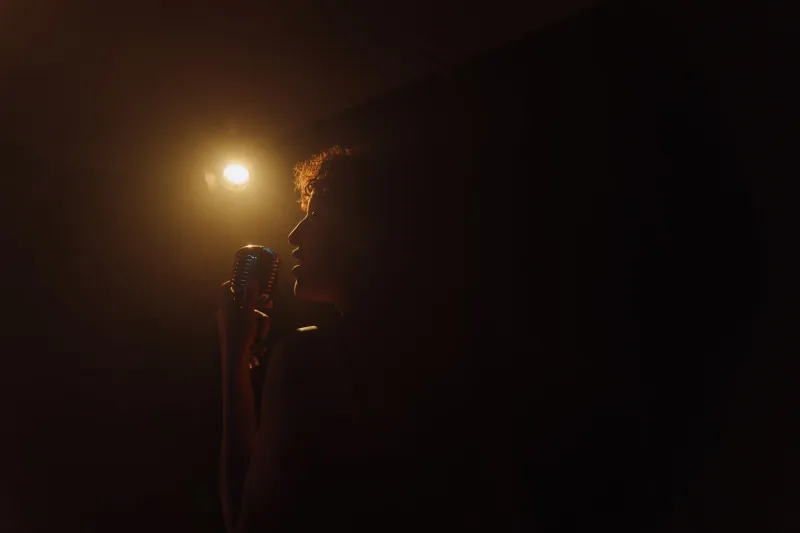
Everybody loves the origin story. The first open mic. The shaky hands, the cracked voice, the poem that made a stranger cry in the back row of a coffee shop that smelled like burnt espresso and ambition. The spoken word world practically runs on debut energy—there's a whole mythology built around the moment an artist first finds their voice.
What the mythology skips? Everything that comes after.
The indie lit circuit has a quiet problem with the middle of a career. We celebrate arrivals. We eulogize burnouts. But the messy, unglamorous, genuinely interesting work of staying—of evolving, pivoting, stumbling into something new—barely gets a paragraph. And that silence is costing artists something real.
Because here's what's actually happening out there, if you pay attention: the spoken word performers who are still packing rooms five, eight, ten years in aren't the ones who perfected their debut and held it tight. They're the ones who blew it up and built something different.
The Myth of the Linear Career
The story the indie lit world tells itself goes something like this: artist emerges, artist goes viral (or near-viral), artist burns out on the confessional treadmill, artist disappears. It's a clean arc, and it's almost entirely fiction.
Real careers are messier and more interesting. Talk to the performers who've been at this for a decade and you'll hear a different pattern—not a single arc but a series of them. A poet who spent three years doing gut-punch trauma narratives, then spent a year writing nothing, then came back doing political satire with a full band behind her. A spoken word artist who built an audience on love poems, pivoted to long-form literary essays performed live, and somehow brought most of his original fans with him.
These aren't anomalies. They're the template, and we're just not writing about it.
What Reinvention Actually Looks Like
Let's be specific, because "reinvention" is one of those words that sounds inspiring and means nothing until you give it some texture.
For some artists, it looks like a genre pivot. Moving from confessional lyric poetry into something more narrative, more theatrical, more grounded in research and reported storytelling. The emotional core stays intact—the audience still feels something—but the vehicle changes completely. This is harder than it sounds. It means risking the audience you built while trusting that a new one is waiting.
For others, reinvention looks like a platform shift. Artists who built their name performing in 80-seat rooms are now producing podcast-style audio pieces, live album recordings, or hybrid events that blur the line between a reading and a concert. The stage doesn't disappear—it expands.
And for a growing number of mid-career performers, reinvention means stepping into mentorship without stepping away from the work. Teaching workshops, producing other artists' debut shows, curating series at local lit venues. This isn't retreat. It's multiplication. Their voice starts showing up in rooms they never physically enter.
The Strategic Break Nobody Talks About
Here's a move that terrifies artists and makes complete sense when you look at the careers that last: the deliberate pause.
Not burnout. Not disappearing. A chosen break, communicated clearly to an audience, with an intention to return.
The spoken word world treats absence like death. If you're not posting, performing, and producing, the assumption is you've quit or collapsed. But some of the most striking artistic pivots have been preceded by a period of intentional silence—time to read, travel, sit with new material, let the old identity shed.
Audiences, it turns out, will wait for someone they trust. What they won't forgive is a performer who keeps showing up with the same show, year after year, because they're afraid to try something new.
Keeping the Audience Through the Change
The practical fear underneath all of this is real: if I change, will they come with me?
Some won't. That's the honest answer. The people who showed up for your 23-year-old grief poems may not be the right audience for your 34-year-old political comedy. And that's okay—more than okay, actually. It means both you and your original fans have grown.
But the artists who navigate transitions most successfully share a few habits worth noting. They're transparent about the shift—they talk to their audiences about what's changing and why, treating their community like collaborators rather than consumers. They don't abandon their catalog wholesale; they find the through-line between the old work and the new, making the evolution feel like a continuation rather than a repudiation.
And they show up in new rooms before they need to. They don't wait until their old circuit dries up to start building relationships in new spaces. The genre pivot, the platform shift, the mentorship turn—these work best when they're chosen from a position of creative momentum, not survival panic.
The Glamour of the Long Game
Glitter Words Live exists in the space where performance and literature collide, and if there's one thing that space knows, it's that the most dazzling moments aren't always the loudest ones. Sometimes the most electric thing in the room is watching an artist who's clearly been at this for years—someone who carries their whole history on stage with them, who's shed three versions of themselves to arrive at this particular moment, this particular poem, this particular truth.
That's not a debut. That's mastery. And it's built on exactly the kind of reinvention the indie lit world keeps failing to celebrate.
The comeback narrative isn't about returning from failure. It's about having the nerve to leave behind what worked, trust the discomfort of becoming something new, and walk back onto the stage anyway.
Act Two isn't a consolation prize. For the artists doing it right, it's the whole show.