The Camera Doesn't Lie: How Live Lit Found Its Second Stage Online
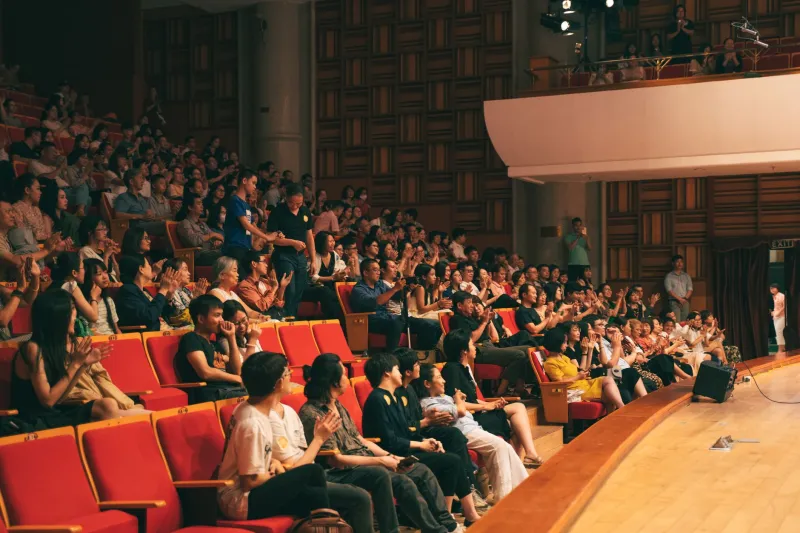
For a long time, the conventional wisdom in spoken word was simple: the room is the point. The electricity between performer and audience, the collective breath, the shared silence—these were the things that made live literature worth leaving the house for. Streaming a show felt like offering someone a photograph of a meal instead of dinner.
That thinking made sense once. It doesn't anymore.
Across the country, spoken word events and literary performance nights are discovering that the audience on the other side of a camera isn't a lesser audience—it's a different one, with its own energy, its own loyalty, and increasingly, its own willingness to pay. The question is no longer whether to stream. It's how to do it well enough that people actually show up.
Why the Timing Finally Makes Sense
The pandemic forced the live arts world into digital performance out of necessity, and a lot of what got built in that period—Zoom readings, Instagram Live sets, YouTube archives—was rough. But it was also instructive. Artists discovered that some of their most devoted fans were people who'd never been able to attend a show in person: people in smaller cities without robust literary scenes, disabled audience members for whom venue access was a barrier, parents who couldn't get a babysitter on a Wednesday night, people in different time zones who found a poet's work online and fell hard.
Those audiences didn't go away when in-person shows came back. They just got underserved again—until a new wave of organizers decided to treat digital attendance as a first-class ticket rather than a workaround.
What Actually Works on Camera
Not every spoken word format translates to a screen, and the events that have cracked digital engagement have been honest about that. Big, chaotic open mics with fifteen performers and variable audio quality don't make for compelling streaming content. Neither does a showcase where the camera is static, the lighting is muddy, and the host keeps forgetting the stream exists.
What works is deliberate design. Events that stream well tend to have a few things in common: a tight lineup of four to six performers with clear transitions, a host who actively addresses the digital audience as well as the in-room crowd, clean audio that prioritizes the mic over ambient room noise, and enough visual interest—good lighting, a well-framed shot, maybe a second camera angle—to keep a viewer's attention on a laptop screen.
Solo shows and curated two-person bills are the sweet spot. They're easier to shoot, easier to follow, and easier for a viewer to emotionally invest in. The intimacy that makes spoken word powerful in a small room can actually be amplified on a screen—a close-up of a performer's face during a devastating line hits differently than watching from the back row of a bar.
The Revenue Math Is Changing
Here's the part that's getting organizers' attention: digital tickets are often cheaper to sell and easier to scale than physical ones. A venue has a fire code. A stream doesn't.
Several mid-sized literary events have started experimenting with tiered digital access—a $10 live stream ticket, a $25 ticket that includes a 30-day replay window, a $50 bundle that adds a PDF of the featured poets' work or a discount on a future workshop. The overhead on those tiers is minimal compared to the cost of adding a hundred in-person seats, which would require a bigger venue, more staff, more insurance, and a host of other expenses.
One Chicago-based literary series reported that their streamed quarterly showcase now regularly pulls in more revenue from digital tickets and post-show replays than from in-person ticket sales—and their in-room shows sell out. They're not replacing the live experience; they're running a parallel economy alongside it.
The Performer's Perspective
For individual artists, streaming opens up something the traditional touring model has always struggled with: geographic reach without geographic cost. A poet based in Nashville doesn't have to fly to New York to perform for a New York audience. They can be booked for a digital feature, perform from their living room with decent lighting and a good microphone, and reach a crowd they'd otherwise never access.
This is particularly meaningful for artists who face systemic barriers to the traditional touring circuit—whether that's financial, physical, or tied to caregiving responsibilities. The digital stage isn't a lesser stage for these performers. It's the one that was finally built for them.
Some artists are going further, producing their own streaming events entirely—ticketed digital showcases hosted through platforms like Eventbrite, Crowdcast, or even Patreon's live feature—where they control the format, the lineup, the ticket price, and the archive rights. It's a level of creative and financial autonomy that the traditional venue model rarely offers.
Making the Stream Feel Like an Event
The biggest mistake in live lit streaming is treating the digital broadcast as an afterthought. The events that build real online audiences treat the stream as its own production—with its own host intros, its own chat moderation, its own aesthetic identity.
Some of the best examples involve simple but intentional choices: a consistent visual brand for the stream's lower-third graphics, a moderator who reads chat comments aloud so in-room and digital audiences feel connected, a post-show Q&A that's exclusive to digital ticket holders. These aren't technically difficult. They just require someone to care about the online audience as much as the in-room one.
The live literary world has spent decades perfecting the art of making a room feel like a community. The next challenge—already underway, already being solved by the sharpest organizers in the game—is doing exactly that for a room that exists entirely on the other side of a screen. The glitter is digital now, and it's catching the light just fine.