Four Walls and a Mic: The Indie Authors Skipping Publishers and Opening Their Own Rooms
The query letter has been in the outbox for eight months. The manuscript is polished, the comp titles are strong, and the agent's assistant sent a very encouraging form rejection. Meanwhile, three blocks away, there's a 900-square-foot former nail salon with good bones, decent natural light, and a landlord who's willing to negotiate on the first few months.
For a growing number of writers and spoken word artists across the US, that's not a hypothetical — it's the actual fork in the road they faced. And a surprising number of them are choosing the lease.
The Micro-Venue Movement Nobody Named Yet
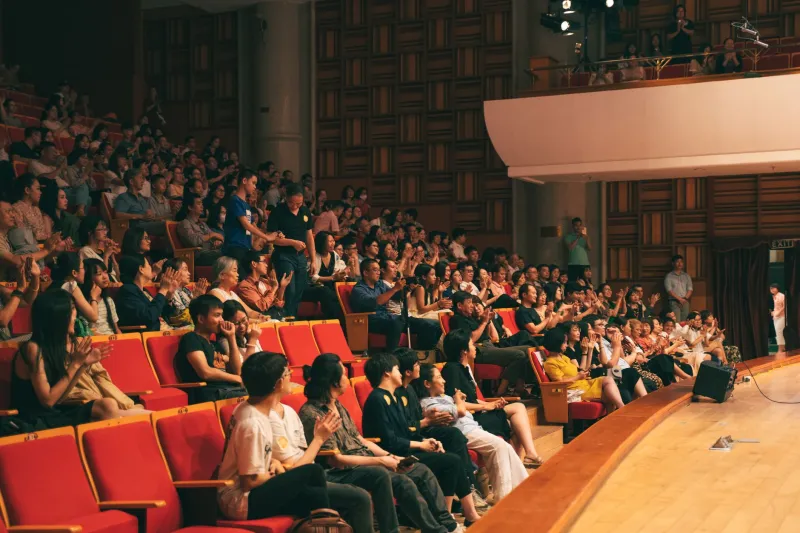
Call it what you want — literary micro-venue, indie reading room, author-owned performance space — the trend is real and it's picking up speed. From a 60-seat converted storefront in Tucson to a basement reading series in Pittsburgh that grew into a proper black-box theater, self-published authors and independent performers are increasingly deciding that owning their own stage is a better investment than chasing traditional distribution.
The logic, when you lay it out, isn't hard to follow. A traditional publishing deal — if you get one, which most writers don't — gives you a modest advance, a percentage of royalties, and very little control over how, where, and to whom your work is sold. A recurring literary series in a space you control gives you direct revenue, a captive audience, community equity, and a platform that compounds over time.
It also gives you a lot of headaches. But we'll get to those.
The Real Numbers
Let's start where most glossy profiles don't: the actual cost of doing this.
Leasing a small commercial space in a mid-size US city — think Columbus, Albuquerque, Richmond — typically runs between $1,500 and $4,000 a month depending on location, condition, and square footage. Add basic buildout for a performance-ready room (a small stage or riser, decent lighting, a PA system, some seating): you're looking at a one-time investment of $5,000 to $20,000, depending on how much you DIY and how much you hire out.
That sounds like a lot. Here's the flip side.
A 60-seat room running a weekly series at $15 a ticket, with an average 70% capacity, grosses roughly $630 a week — about $2,500 a month before expenses. Add a monthly featured author event at $25 a ticket with full capacity: another $1,500. A small merch operation, a few workshops, and a modest membership program can push total monthly revenue to $6,000 to $8,000 in a healthy operation.
It's not a fortune. But it's a living — and more importantly, it's your living, not a royalty percentage that arrives twice a year and requires a spreadsheet to decode.
The People Making It Work
Tamara Osei opened The Margin in Durham, North Carolina, three years ago after her second self-published poetry collection sold well at local events but went nowhere through online retail channels. "I was selling books out of my trunk at farmers markets," she says, laughing. "I figured if people were going to come to me anyway, I should give them somewhere comfortable to do it."
The Margin now hosts four events a week, maintains a small lending library, runs a monthly youth workshop series, and sells books by local authors on consignment. Osei pays herself a modest salary, has one part-time employee, and describes the business as "genuinely sustainable" for the first time since she started writing professionally.
In Portland, Oregon, a collective of three spoken word artists co-lease a 75-seat space they call The Annotated Room. The shared-cost model — each contributor kicks in roughly $800 a month — keeps individual financial exposure manageable while giving all three artists a home base, a booking infrastructure, and a brand that's bigger than any of them individually.
"We're each other's booking agents, each other's tech crew, and each other's audience on a slow night," says co-founder Priya Nair. "It's not always pretty. But it's ours."
The Operational Reality
Anyone considering this path should go in clear-eyed about what "owning your stage" actually involves. You are now, in addition to being an artist, a venue operator. That means booking, marketing, ticketing, sound, front-of-house, cleaning, maintenance, and the specific joy of finding out your HVAC unit needs replacing two weeks before your biggest event of the year.
The artists who thrive in this model tend to share a few characteristics: they're genuinely organized (or partnered with someone who is), they're comfortable with the business side of creative work, and they have a realistic relationship with the concept of "slow months."
Summer is hard. The week after Thanksgiving is hard. Any week where three other things are happening in your neighborhood is hard. Building a reserve fund — most experienced micro-venue operators recommend three months of operating expenses — is not optional. It's the difference between a temporary rough patch and a closed sign on the door.
What a Publishing Deal Can't Buy
For all the operational complexity, the artists running these spaces consistently point to something that no traditional publishing arrangement could replicate: direct, unmediated relationship with their audience.
When Tamara Osei sells a book at The Margin, she knows the name of the person who bought it. She knows why they came, what other writers they love, and whether they're likely to come back next month. That data — granular, human, relationship-based — is worth more to her creative and business development than any sales report from a distributor.
"A publisher can put your book in Barnes & Noble," she says. "But they can't tell you that the woman in the third row has been coming every week for two years because your first collection helped her through her divorce. That's not a metric. That's a community."
And community, it turns out, is the most durable asset in the live literary economy. The venues that last aren't the ones with the best lighting rigs or the biggest headliners. They're the ones that became, over time, genuinely necessary to the people who show up.
Four walls, a mic, and a room full of people who needed exactly this. Turns out that's a better deal than most publishing contracts.