The Spark That Sells Tickets: How Live Lit's Most Uncomfortable Moments Became Its Hottest Marketing
It started with a walkout.
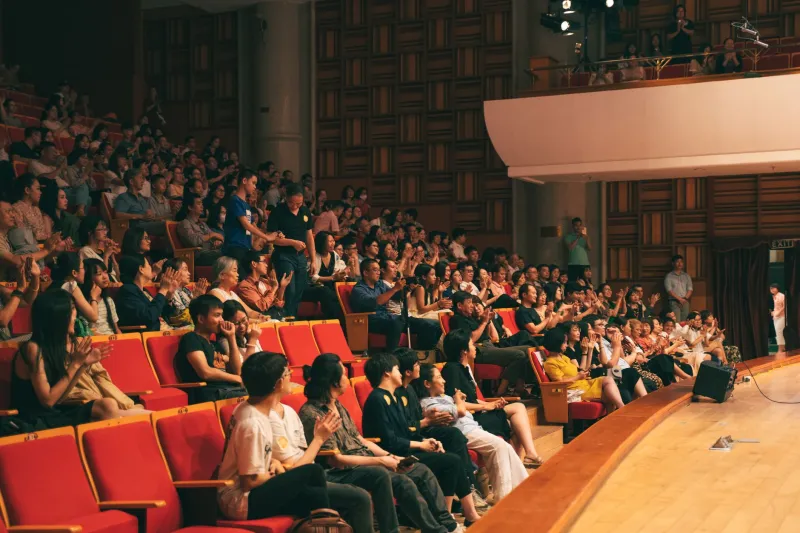
Marcus Ellery, a queer Black spoken word artist based in Atlanta, was three stanzas into a poem about his father when a man in the fourth row stood up, said something loud enough for the front half of the room to hear, and left. The rest of the audience went completely still. Ellery finished the poem. The room erupted.
Within 48 hours, a video clip of the moment — captured on someone's phone and posted without his knowledge — had racked up over 200,000 views. His next two shows sold out before he'd even finished updating his booking page.
"I didn't plan it," he says. "I didn't want it. But I'd be lying if I said it didn't change everything."
Conflict as Catalyst
Live performance has always carried the electricity of the unscripted. It's part of what makes it irreplaceable in an era of infinite on-demand content — the knowledge that anything could happen, that the room itself is a live variable. But something has shifted in the live lit world over the last few years. Friction isn't just being tolerated; in some corners of the scene, it's being actively cultivated.
The mechanics are straightforward enough. A controversial moment — a pointed poem, a tense exchange with an audience member, an unexpected political statement from the stage — generates a reaction. That reaction, captured and shared, generates attention. Attention generates bookings. Bookings generate revenue.
It's a loop that the broader entertainment industry figured out a long time ago. Reality television built an empire on it. But for a literary world that has traditionally prized intimacy, thoughtfulness, and emotional safety, it raises genuinely complicated questions.
When the Room Pushes Back
Not every controversy is engineered. Some of the most talked-about moments in recent live lit history have been genuinely accidental — a poem that landed harder than expected, a Q&A that spiraled into an argument, a performer who said something true and paid for it in real time.
Sierra Montague, who runs a monthly literary series in Brooklyn called The Unfiltered Room, has watched this dynamic play out repeatedly. "The nights where something goes sideways are always the nights people are still talking about six months later," she says. "And not always in a bad way. Sometimes 'sideways' just means 'real.'"
The distinction she draws is between conflict that illuminates and conflict that merely inflames. A poem that makes an audience reckon with something uncomfortable — their own complicity, a perspective they've never considered, a truth that disrupts their self-image — can produce the kind of productive discomfort that keeps people coming back. A performance that's simply provocative for provocation's sake tends to produce a different kind of buzz: louder in the short term, emptier in the long run.
The Ethics of Courting the Edge
Here's where the conversation gets thornier: what happens when artists start deliberately manufacturing friction?
Some performers are doing exactly that — writing material specifically designed to generate pushback, structuring shows to create moments of tension, even reportedly seeding audiences with people primed to react. The results, at least in terms of short-term visibility, can be impressive. The ethical math is considerably messier.
"There's a difference between being brave and being a provocateur," says Dani Reyes, a Chicago-based poet and workshop facilitator who has thought a lot about this line. "Brave means you're saying something true that might cost you something. Provocateur means you're manufacturing a reaction to benefit yourself. The audience can usually tell the difference, even if they can't articulate it."
The risk of leaning too hard into manufactured controversy is that it hollows out the very thing that makes live lit compelling. If the audience suspects the "authentic moment" was staged, the trust that makes the whole enterprise work evaporates. And in a scene built on the premise of real human connection, lost trust is very hard to rebuild.
What the Clips Don't Show
The viral moment is always a fragment. What the 30-second clip of Ellery's walkout doesn't show is the five years of craft development that made the poem worth walking out of, or the decade of community building that filled that room with people who were ready to sit with something difficult.
This is the part that often gets lost in the conversation about controversy as marketing: the moments that generate organic buzz almost always emerge from a foundation of genuine artistic investment. The performers whose uncomfortable moments turn into career momentum tend to be the ones who were already doing serious, committed work — not the ones who decided to be edgy and hoped for the best.
"The controversy didn't make my career," Ellery says carefully. "The poem made my career. The controversy just introduced it to a bigger room."
Playing With Fire, Responsibly
For performers navigating this landscape, the practical question isn't whether to avoid controversy — great art is inherently controversial to someone. The question is how to engage with it honestly.
That means writing from a place of genuine conviction rather than calculated provocation. It means being thoughtful about the difference between challenging an audience and alienating them. It means understanding that the most durable buzz isn't generated by the moment of friction itself — it's generated by the quality of what's on either side of it.
And it means being honest with yourself about your own motivations. Are you saying something because it's true and necessary, even if it costs you something? Or are you saying something because you want the clip?
The room knows the difference. It always does.