From the Page to the Closet: How Spoken Word Artists Are Building Empires at the Merch Table

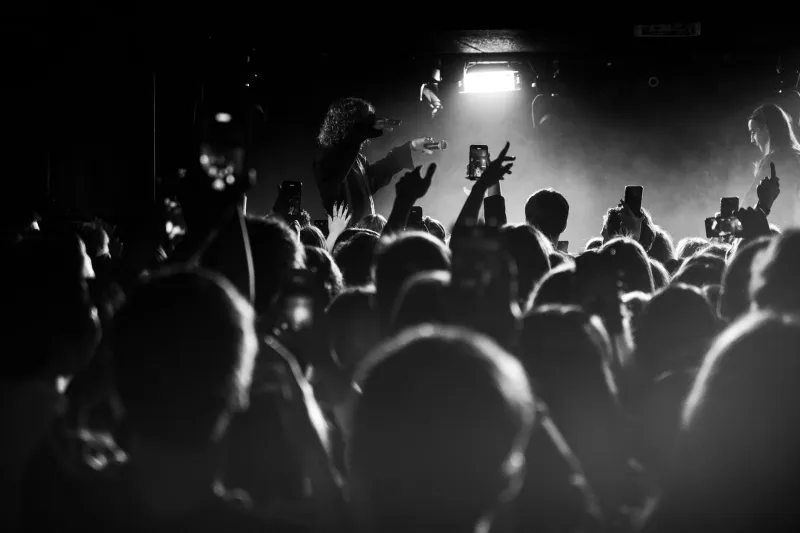
There's a moment that happens at almost every sold-out spoken word show these days. The last poem lands. The applause rises. And before the house lights even finish coming up, a line has already formed — not at the bar, not at the exit, but at the merch table tucked against the back wall. Crewnecks. Zines. Hand-stamped tote bags. Enamel pins etched with lines that just wrecked somebody's whole night in the best possible way.
This is the merch table revolution, and it's quietly reshaping the economics of live literary performance in America.
Poetry You Can Actually Wear
For years, the conventional wisdom was that a spoken word artist's real money lived in ticket sales, maybe a book deal if you were lucky, and the occasional workshop fee. Merch was an afterthought — a sad stack of self-published chapbooks and a tip jar. That era is over.
Today's live lit performers are approaching merchandise with the same intentionality that indie musicians and visual artists have used for decades. They're commissioning original artwork for limited-run apparel. They're screen-printing signature lines onto heavyweight tees that people actually want to wear to brunch. They're producing hand-numbered zines with alternate versions of set-list poems that exist nowhere else — not on Instagram, not on streaming, nowhere. You had to be in the room, and you have to buy the zine to take that version home.
The scarcity model, borrowed straight from the sneaker world, turns out to work beautifully for literary culture.
What's Actually Selling (And What's Not)
Ask any mid-level touring spoken word artist what moves fastest at their table and you'll hear a pretty consistent answer: apparel and one-of-a-kind paper goods, in that order.
A well-designed crewneck sweatshirt featuring a performer's signature phrase or a striking visual interpretation of their work can easily retail for $55 to $75 and will sell out before the encore. Tote bags — the perennial darling of the literary world — remain strong, especially when the design feels more like wearable art than a promotional item. Enamel pins, priced accessibly at $12 to $18, serve as impulse buys that add up fast across a three-hundred-person room.
On the paper side, limited-edition chapbooks and hand-assembled zines are outperforming traditionally printed collections at the table. There's something about the tactile experience of a saddle-stitched, hand-stamped booklet that a perfect-bound trade paperback just can't replicate in a live event context. Fans want the artifact of the evening, something that feels as alive and electric as the performance itself.
What's underperforming? Generic. Anything that could have come from any artist, at any show, in any city is a tough sell. The audience at a live lit event is sophisticated. They know the difference between a passion project and a cash grab, and they vote with their wallets accordingly.
The Numbers That Are Turning Heads
Here's where it gets genuinely interesting for anyone paying attention to the business side of literary performance. For a growing number of mid-level touring artists — performers doing regional circuits, selling out two-hundred to five-hundred seat venues — merch revenue is pulling even with, and in some cases surpassing, their take-home from ticket sales.
Consider the math on a two-hundred-seat show with a $20 ticket. After venue fees, tech costs, and any promotional spend, a performer might net somewhere between $1,500 and $2,500 from the door. Now imagine that same show where sixty percent of the audience spends an average of $35 at the merch table. That's an additional $4,200 in gross revenue from a single night — with significantly lower overhead than the ticket infrastructure.
Artists who've cracked this model talk about it the same way: the key is treating the merch table as a curated retail experience, not a clearance rack. Presentation matters. Lighting matters. Having someone staffing the table who's genuinely enthusiastic about the products matters enormously.
Collaboration as a Merch Strategy
One of the smartest moves happening in live lit right now is the artist collaboration. Spoken word performers are teaming up with illustrators, graphic designers, and even other poets to create merch that carries a dual cultural signature — something that appeals to both artists' fan bases and feels genuinely collectible.
Think of it as the literary equivalent of a sneaker collab. When a poet known for their political work partners with a muralist from their hometown to design a limited run of one hundred screen-printed posters, they're not just selling a poster. They're selling a piece of a specific cultural moment. Those sell out. Sometimes before the show even happens, through pre-order drops that build anticipation the way album releases used to.
This approach also does something subtler but equally valuable: it positions the performer as a cultural curator, not just a solo act. That's a brand identity with real staying power.
Building the Table Before You Hit the Road
For performers just starting to think seriously about merchandise, the advice from veterans is consistent: start before you think you're ready, and invest in quality over quantity.
You don't need twelve SKUs at your first table. You need two or three things that are genuinely excellent and feel specific to who you are as an artist. A single well-designed piece of apparel and a limited chapbook can outperform a cluttered table of mediocre products every single time.
Platforms like Printful and Printify have lowered the barrier to entry for on-demand production, but the artists seeing the biggest returns are those who invest in short-run, high-quality manufacturing — even when it costs more upfront. The perceived value difference between a print-on-demand tee and a premium blank with a hand-pulled screen print is immediately apparent to the kind of audience that shows up for spoken word.
The Merch Table as Community
Maybe the most underrated thing about a thriving merch table is what it does for the room beyond generating revenue. It extends the energy of the performance. It gives audience members a reason to linger, to talk to each other, to connect with the artist in a low-stakes, post-show context. It transforms a single evening into an ongoing relationship between a performer and their people.
That fan who buys the crewneck wears it to their next open mic. Someone asks where they got it. A new listener finds their way to your next show. The merch table, at its best, is a word-of-mouth engine dressed up in a really good graphic tee.
Live lit has always been about making language feel alive in a room. The merch table revolution is just the next logical step — making sure that aliveness has somewhere to go when the show is over.