Who Can Afford to Feel Something? The Real Math Behind Live Lit's Ticket Problem
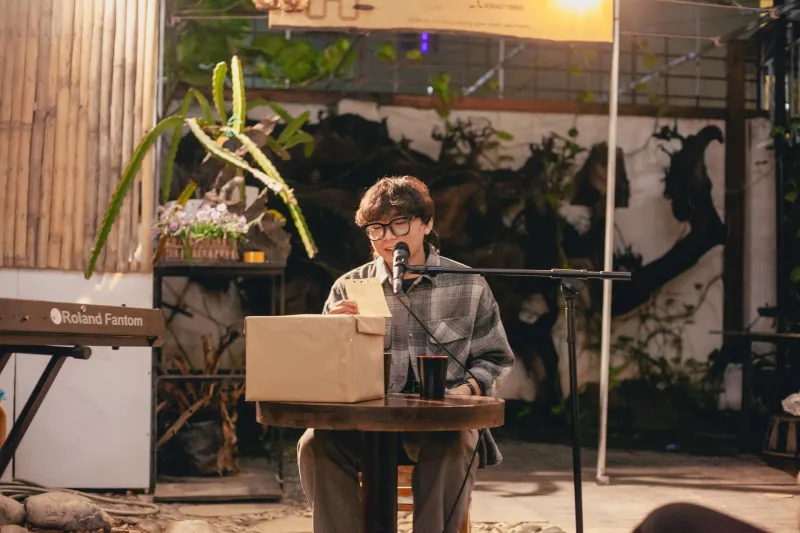
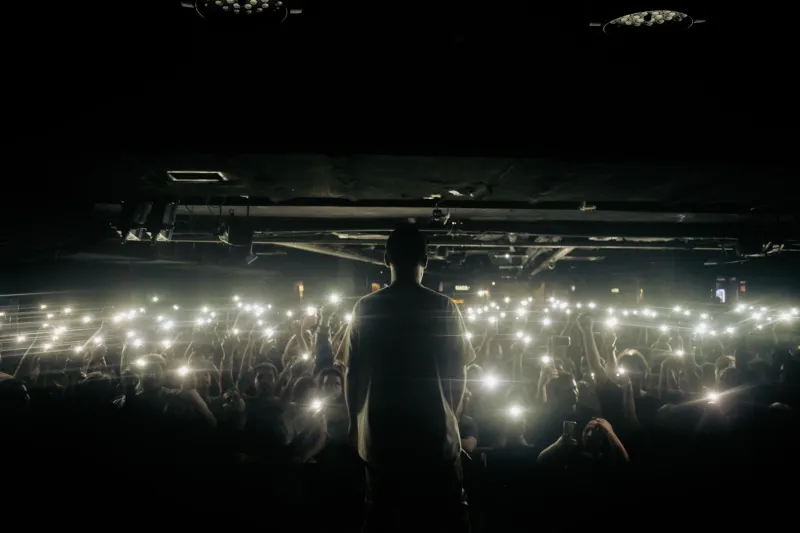
There's a moment that happens at almost every great spoken word show. Someone on stage says something so precisely true that the room goes quiet in a way that feels almost sacred. For a few seconds, a hundred strangers are breathing together. That's the thing live lit sells — not a poem, not a performance, but the experience of being genuinely moved alongside other people.
So what does that cost? And more importantly: who gets to afford it?
These are the questions a growing number of venues, curators, and working artists are asking out loud right now — and the answers are messier, more urgent, and more interesting than a simple debate about luxury pricing.
The Squeeze Is Real, and It's Coming From Both Sides
Let's start with the numbers, because they matter. Venue rental in most mid-size US cities has climbed sharply since 2021. Sound tech, lighting, liability insurance, accessibility accommodations — none of it is cheap, and very little of it is optional if you're running a legitimate operation. Meanwhile, the grant landscape for literary arts programming has gotten more competitive, with many NEA and state arts council funds stretched thin across a widening field of applicants.
Artists are feeling it too. The spoken word performer who headlines your favorite monthly series is often working a day job, absorbing their own travel costs, and accepting a door split that would make most freelancers wince. When venues raise ticket prices to cover their overhead, they're frequently doing it just to make sure the people on stage can get paid something resembling a living.
None of that makes a $35 ticket feel less steep to someone choosing between that and a week of groceries.
The Sliding Scale Experiment
Some of the most interesting venues in the country are quietly running what amounts to a pricing laboratory. Sliding scale ticketing — where audiences choose their price within a suggested range — has moved from a radical experiment to a genuine operational strategy at places like The Moth community events, local slam series, and independent lit nights from Brooklyn to Portland to Atlanta.
The model works better than skeptics expected, partly because of something that sounds almost embarrassingly optimistic: most people, when trusted to pay fairly, actually do. Venues that have adopted transparent sliding scale structures — where they publicly explain what different price points cover — report that audiences at the higher end of the range often increase their contribution specifically because they understand where the money goes.
"When we told our audience that $15 covered our break-even and $25 helped pay the feature," said one Chicago-based organizer who runs a monthly literary cabaret, "people started choosing $25. They wanted to be part of keeping it going."
That transparency is doing a lot of heavy lifting. It reframes the ticket from a consumer transaction into something closer to community investment.
The Psychological Weight of the Price Tag
Here's what the economics conversation often misses: the barrier isn't always financial. Sometimes it's psychological.
For audiences who didn't grow up seeing literary performance as something meant for them — working-class communities, first-generation college students, people of color navigating predominantly white cultural spaces — a $30 ticket attached to an upscale venue with a wine list sends a signal that has nothing to do with the actual dollar amount. It says: this room wasn't built with you in mind.
The best venues in the country are grappling with this honestly. It means thinking about where you're located, how your marketing reads, whether your front-of-house staff reflects the community you claim to serve, and whether your "pay what you can" night is buried on your website or front and center in your promotion.
Accessibility isn't a discount. It's a design choice that starts long before anyone pulls out a credit card.
What "Worth It" Actually Means
The live lit industry has spent a lot of energy lately — and rightfully so — making the case that a night of words is worth premium pricing. And it is. A great spoken word show can crack something open in you that therapy couldn't reach. That's not hyperbole; that's the testimony of audiences across the country.
But "worth it" is a relationship between value and context, and context includes what else is competing for that twenty-dollar bill in someone's wallet. The luxury positioning that works beautifully for a curated evening in a Manhattan loft hits differently when you're trying to fill seats in a community arts center in Memphis or a black box theater in Albuquerque.
Some venues are threading this needle by running tiered event structures — a free or low-cost community night alongside a premium ticketed showcase — and being honest about the fact that both serve different but equally valid purposes. The free night isn't a charity gesture. It's a pipeline, a community builder, and often the room where the most electric performances happen because the stakes feel different when nobody's calculating ROI.
The Artists Are Watching
There's one more voice in this conversation that doesn't always get centered: the performers themselves, many of whom came up in scenes built on radical accessibility. Open mics with no cover. Slams with a one-drink minimum and nothing else. The ethos that poetry belongs to everyone, full stop.
As live lit has professionalized — and that professionalization has been genuinely good for artists' ability to earn a living — some performers are feeling a tension between sustainability and the values that drew them to the form in the first place. They want to get paid. They also want their work to reach the people it was written for, and those people aren't always the ones with disposable income and a taste for artisanal cocktails.
The venues and artists getting this right are the ones treating that tension as a feature, not a bug. They're building pricing structures that ask more from people who have more, protect access for people who don't, and communicate clearly about why — because audiences, it turns out, can handle the truth about what it costs to keep the lights on and the mic open.
The Glitter Doesn't Have to Be Exclusive
Live literary performance is having a genuine cultural moment. Rooms are full, new audiences are showing up, and the art form is evolving in thrilling directions. The risk — and it's a real one — is that the economics of that success price out the communities whose voices and stories are often the ones filling those rooms with electricity.
The good news is that the solution doesn't require choosing between sustainability and soul. It requires creativity, transparency, and the willingness to design for the whole room, not just the people who can afford the best seat in it.
Because the magic that happens when a room full of strangers breathes together? That's not a luxury product. That's the whole point.